
Are You Looking for an Online Autism Treatment & Speech Therapy Centre in Victoria?
Finding the right developmental and therapeutic support can make everyday communication, learning, behaviour, and independence easier for children and families. If you are searching for an Online Autism Treatment & Speech Therapy Centre in Victoria, it is important to look beyond a single therapy and consider the child’s complete developmental profile. Speech and language needs, autism-related differences, sensory processing, academic difficulties, emotional regulation, and hearing concerns can sometimes overlap, so assessment and coordinated intervention matter. In Victoria, families can access public developmental and rehabilitation services alongside private therapy providers, making it useful to understand what each service actually does. Hope Centre for Speech Therapy and Autism Treatment provides a coordinated approach that can bring speech therapy, autism intervention, special education, occupational therapy, CBT, and hearing-related support together according to individual needs. The goal is practical progress that can be seen at home, school, and in everyday communication.
What Is Speech Therapy, and What Symptoms Can It Treat?
Speech therapy supports children and adults who have difficulties with communication, speech sounds, language development, fluency, voice, or related communication skills. Signs that may justify an assessment include limited vocabulary, difficulty forming sentences, unclear speech, trouble following instructions, frequent communication breakdowns, or difficulty expressing needs. A speech-language pathologist assesses the person’s receptive and expressive language, speech production, social communication, and other relevant skills before setting treatment goals. For children in Victoria, speech-language services may also work alongside schools and other professionals when communication affects classroom participation. Hope Centre for Speech Therapy and Autism Treatment focuses on functional communication rather than isolated exercises, helping clients practise skills that are useful in real conversations. Depending on assessment findings, therapy may target articulation, vocabulary, sentence development, comprehension, social communication, or alternative ways of communicating.



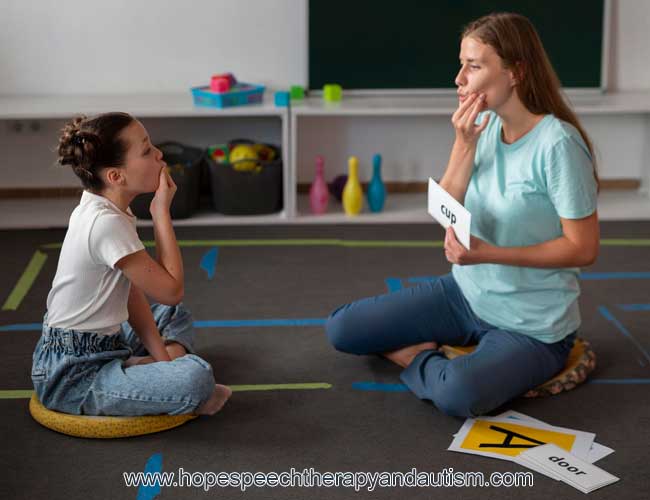
Effective speech therapy is usually based on measurable goals and regular review of progress. For example, a child who cannot clearly produce certain sounds may need structured articulation practice, while another child may need support understanding questions, using longer sentences, or participating in peer conversations. Teletherapy can also be useful when the child can engage effectively through an online platform, particularly for families who value flexible scheduling. Hope Centre can adapt sessions to the client’s age, communication profile, and learning style, while involving parents where appropriate so strategies can continue between sessions. For families looking for an Online Autism Treatment & Speech Therapy Centre in Victoria, this combination of professional guidance and home practice can make therapy more consistent and meaningful.
What Is Autism, and What Are Its Symptoms and Treatment Options?
Autism spectrum disorder is a neurodevelopmental condition associated with differences in social communication, interaction, behaviour, interests, and sensory processing. Symptoms vary considerably from person to person. Some children may have delayed spoken language, while others speak fluently but struggle with back-and-forth conversation, social cues, flexibility, or understanding another person’s perspective. Repetitive movements, intense interests, distress around unexpected changes, and unusual responses to sounds, textures, or other sensory experiences can also occur. Autism should not be diagnosed from one behaviour alone. In Victoria, formal assessment may involve a qualified specialist and information from developmental history, observation, and relevant professionals. Hope Centre for Speech Therapy and Autism Treatment takes an individualized approach after understanding the child’s strengths and support needs. Autism therapy can then focus on communication, functional independence, social participation, emotional regulation, and other practical goals.


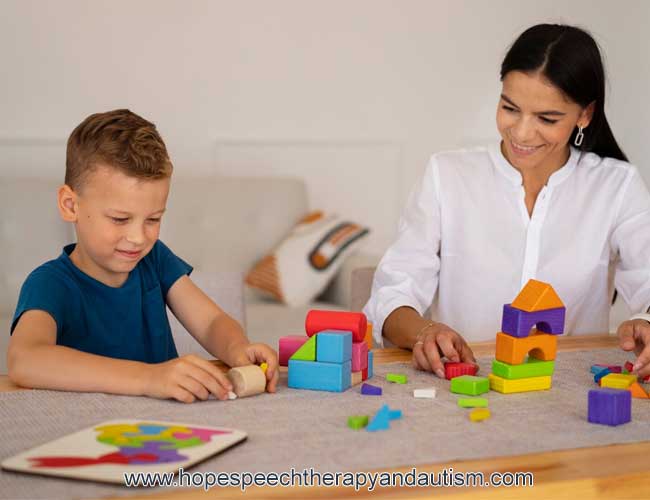

Autism treatment is not about making a person appear less autistic; it is about supporting useful skills, participation, communication, and quality of life. Depending on the individual, intervention may include speech-language therapy, behavioural support, occupational therapy, social communication work, academic support, or counselling. Goals should be specific enough to monitor, such as improving functional requesting, tolerating changes in routine, completing daily tasks, or participating in classroom activities. Hope Centre provides autism therapy designed around these practical outcomes and can coordinate different areas of intervention rather than treating every difficulty separately. Families should also understand that autism support needs can change with age. A plan that works for a preschool child may need substantial adjustment when the child enters school, becomes more independent, or faces new social and academic demands.
What Are Special Education and Academic Therapy, and Who Can Benefit?
Special education provides individualized educational support for students whose disabilities, developmental differences, learning difficulties, or other needs affect access to the curriculum. Academic therapy is more targeted than ordinary tutoring because it focuses on the underlying skills that interfere with learning. A student may need help with reading accuracy, comprehension, written expression, mathematics, attention, organization, or working memory. In British Columbia, school-based teams can coordinate supports for students with diverse learning and developmental needs, making communication between families, educators, and therapists particularly valuable. Hope Centre for Speech Therapy and Autism Treatment can complement school support by identifying specific academic barriers and developing structured learning strategies. The emphasis is on achievable skills and consistent practice rather than simply giving the student more worksheets. This approach can be particularly helpful when a child understands concepts verbally but struggles to demonstrate knowledge independently.




Good academic intervention starts with understanding why a student is struggling. For example, poor reading may relate to decoding rather than motivation, while incomplete assignments may reflect executive-function difficulties rather than a lack of ability. Hope Centre can build individualized academic goals around the learner’s current level and use repetition, visual supports, guided practice, and gradual independence to strengthen performance. For families in Victoria, collaboration with teachers can also help ensure that strategies used during therapy make sense within the classroom environment. Special education and academic therapy should ultimately give students more opportunities to participate successfully, develop confidence, and become less dependent on adult assistance. Progress can be monitored through functional school tasks rather than relying only on test scores.
What Is Occupational Therapy and Sensory Integration Therapy, and When Is It Needed?
Occupational therapy helps people develop the skills required for everyday activities, including dressing, eating, handwriting, classroom participation, play, and self-care. For children with developmental differences, an occupational therapist may examine fine-motor abilities, coordination, attention, motor planning, and sensory responses. Sensory integration approaches may be considered when a child has difficulty responding appropriately to sensory information such as movement, touch, sound, or visual input. However, sensory strategies should be selected according to the child’s individual functional needs rather than used as a generic solution for every behaviour. In Greater Victoria, public child and youth therapy services include occupational therapy for eligible children and youth, including school-age programs. Hope Centre provides individualized occupational therapy and sensory integration support focused on practical participation. The objective is to help the child manage everyday demands more successfully, not simply to provide sensory activities without a clear functional purpose.
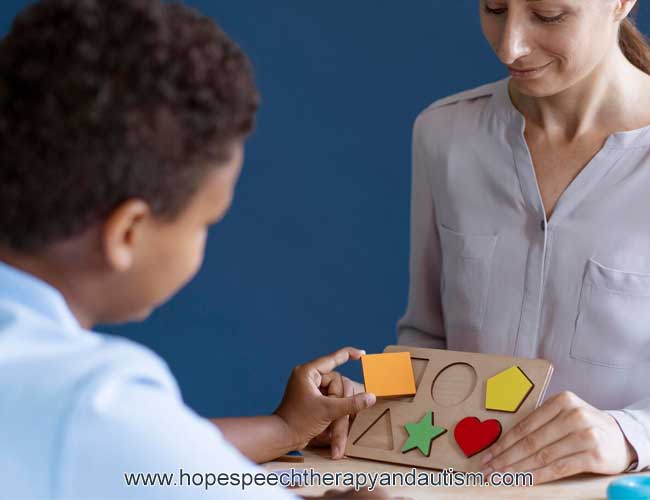
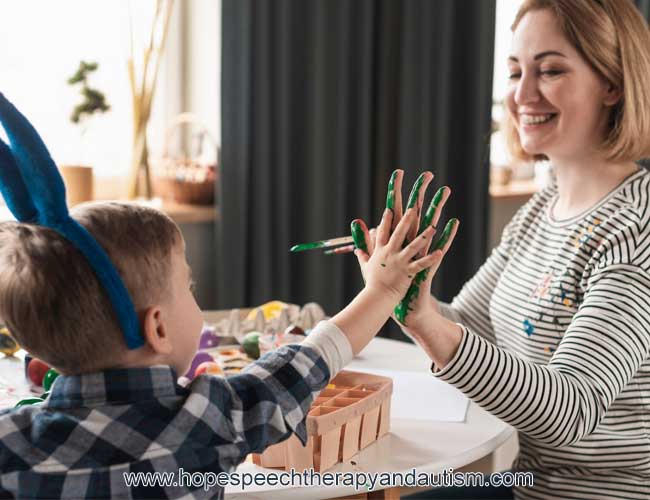


Common reasons for an occupational therapy assessment include difficulty with handwriting, using classroom tools, managing clothing fasteners, feeding routines, coordination, or tolerating particular sensory experiences. Treatment may involve task modification, fine-motor activities, motor-planning exercises, environmental changes, and strategies that support regulation and independence. Hope Centre can connect occupational goals with the child’s broader developmental plan, so progress in one area supports progress elsewhere. For example, improved hand strength and coordination may help handwriting, while better regulation may improve participation during speech or academic sessions. This coordinated model is especially useful for children whose sensory, motor, communication, and learning needs interact. Families should expect therapy goals to be reviewed as skills improve, because occupational therapy should remain relevant to the child’s current daily challenges.
What Is CBT, and How Can Cognitive Behavioral Therapy Help?
Cognitive Behavioral Therapy, commonly called CBT, is a structured psychological approach that examines connections between thoughts, emotions, and behaviours. It can help children, adolescents, and adults who experience difficulties such as anxiety, negative thinking patterns, emotional regulation problems, or avoidance behaviours, when CBT is clinically appropriate. The approach usually teaches practical skills for recognizing unhelpful thoughts, understanding emotional responses, developing coping strategies, and gradually changing behaviours. CBT should be adapted to developmental level, communication ability, and cognitive skills. For children with autism, traditional CBT may need additional visual supports, concrete language, repetition, and caregiver involvement. Hope Centre for Speech Therapy and Autism Treatment can provide individualized CBT support where appropriate, with goals linked to real situations such as managing worry, handling changes, improving emotional awareness, or responding more effectively to stressful situations.




One of the strengths of CBT is that it teaches skills that can be practised outside therapy sessions. A therapist may help a client identify an anxious prediction, examine the evidence for it, develop a more balanced response, and then practise approaching a manageable situation instead of avoiding it. For a child, this process may be supported through drawings, stories, role-play, visual schedules, or parent coaching. Hope Centre aims to make CBT practical and understandable rather than overly theoretical. When CBT is combined with speech, occupational, or autism support, the team can consider how communication and sensory differences influence emotional responses. Families seeking a Cognitive Behavioral Therapy Centre in Victoria should look for qualified professionals who assess whether CBT is appropriate and tailor the intervention to the individual rather than applying the same programme to every client.
What Is Hearing Aid Treatment, and How Can You Find the Best Hearing Aid Centre in Victoria?
Hearing aid treatment begins with identifying the type and degree of hearing loss rather than choosing a device based only on symptoms. A proper hearing assessment can determine whether hearing difficulties are related to conductive, sensorineural, or mixed hearing loss and whether medical assessment is required. Hearing loss can affect speech and language development, classroom learning, social interaction, and confidence, especially in children. In Victoria, Island Health’s Victoria Hearing Clinic provides hearing assessment and monitoring, hearing-aid and FM-equipment evaluation and fitting, and support for eligible children and youth. This makes professional hearing assessment an important part of developmental care when communication concerns may have a hearing component. Hope Centre can support families by incorporating hearing-related needs into a broader communication and developmental plan and by encouraging appropriate audiology follow-up when hearing concerns are identified.

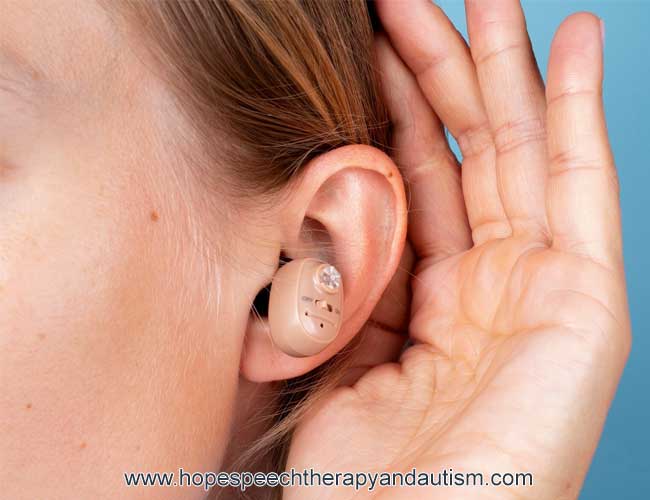

Hearing aids work by amplifying and processing sound according to the wearer’s hearing profile, but fitting is only one part of successful treatment. Children may also need follow-up, device checks, classroom communication strategies, and support using hearing technology consistently. Parents should report concerns such as difficulty responding to speech, frequently increasing volume, unclear speech, or apparent difficulty hearing in noisy environments. Hope Centre can work alongside hearing professionals when communication therapy is also required, helping ensure that speech and language goals reflect the child’s actual access to sound. For families comparing options for the best hearing aid centre in Victoria, professional assessment, appropriate fitting, ongoing follow-up, and coordination with communication and educational supports are more important than simply selecting a device based on price or appearance.
Are You Ready to Choose the Right Therapy Support in Victoria?
Choosing developmental support is easier when the focus remains on the individual rather than a one-size-fits-all programme. Speech and language difficulties, autism, academic challenges, sensory needs, emotional regulation, and hearing concerns can influence one another, so a coordinated plan can be valuable. Hope Centre for Speech Therapy and Autism Treatment offers families a practical way to explore these areas through individualized therapy and goal-based intervention. If you are searching for an Online Autism Treatment & Speech Therapy Centre in Victoria, start with a professional discussion about your child’s current strengths, difficulties, developmental history, and priorities. A careful assessment can help identify the services that are genuinely needed and prevent unnecessary intervention. Contact Hope Centre to discuss your concerns, understand the available therapy options, and create a support plan designed around meaningful progress at home, school, and in everyday life.