
Are You Looking for an Online Autism Treatment & Speech Therapy Centre in UK?
Finding the right support for communication, learning, behaviour, sensory needs, and hearing can be difficult when families have to coordinate several appointments and professionals. An Online Autism Treatment & Speech Therapy Centre in UK can make specialist guidance more accessible by bringing structured sessions into the child’s familiar home environment. This can be particularly useful for families managing school routines, work commitments, travel, or long waiting periods for some services. Hope Centre for Speech Therapy and Autism Treatment provides a multidisciplinary approach that connects speech and language support with autism intervention, academic assistance, occupational therapy, CBT, and hearing-related care. The aim is not simply to provide online sessions, but to work on practical abilities that influence communication, education, independence, and everyday participation.
In the UK, support for children and young people may involve families, schools, speech and language therapists, occupational therapists, psychologists, audiologists, and other professionals. NHS services, local authorities, and education settings can each have different responsibilities, while an independent centre can provide additional therapy according to individual needs. Hope Centre focuses on personalised assessment, measurable therapy goals, regular parent involvement, and practical strategies that can be used beyond the session. The following sections explain what each service involves, the signs that may indicate a need for support, and how families can use these services as part of a coordinated plan. Choosing an Online Autism Treatment & Speech Therapy Centre in UK can be especially valuable when consistency and convenience are important to long-term progress.
What Is Speech Therapy, and Which Symptoms Can It Treat?
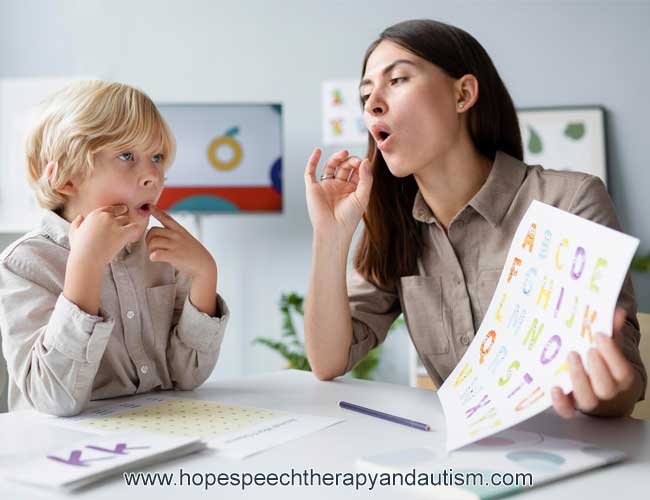
Speech therapy supports people who have difficulties with speech, language, communication, voice, fluency, or related social communication skills. Children may need assessment when they have limited vocabulary, difficulty understanding instructions, unclear speech, problems forming sentences, stammering, or difficulty using communication appropriately with others. Speech and language therapy is not limited to pronunciation; it can address receptive language, expressive language, conversation, communication confidence, and alternative or augmentative communication when appropriate. In the UK, speech and language therapists are regulated professionals who assess communication needs and develop intervention based on the individual’s abilities and goals. At Hope Centre for Speech Therapy and Autism Treatment, sessions can be structured around functional communication, helping children practise skills that are relevant to home, school, and social situations rather than focusing only on isolated exercises.

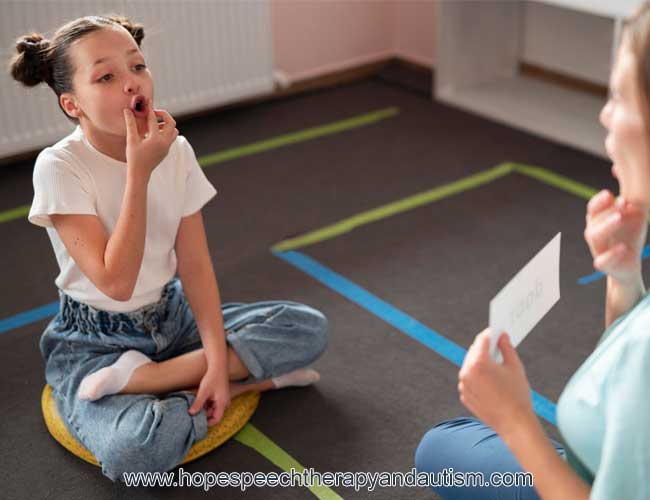
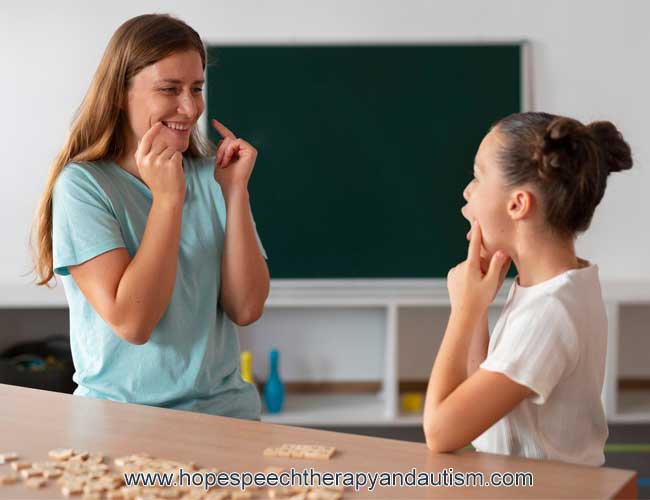
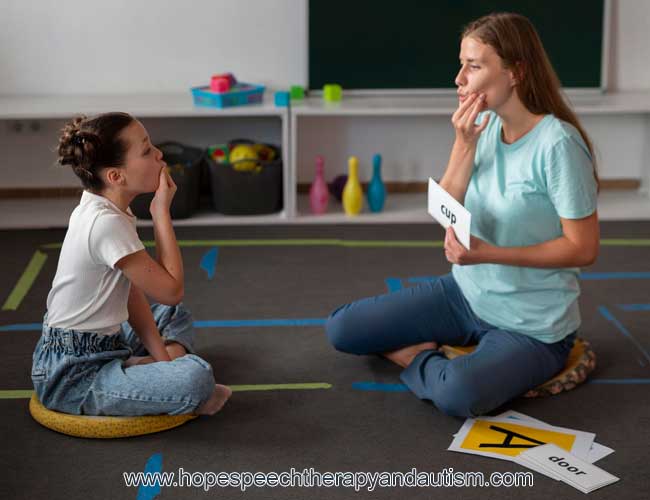
Assessment is important because speech and language difficulties can have different causes and may appear alongside autism, developmental language disorder, hearing difficulties, learning needs, or other developmental differences. Treatment therefore needs to match the child rather than follow a fixed programme. Hope Centre can use individual therapy plans to target areas such as vocabulary development, sentence construction, speech clarity, understanding, social communication, and functional interaction. Parents can also receive strategies for practising communication naturally during meals, play, reading, and daily routines. For families searching for Speech Therapy Services Center in UK, online support can provide continuity when travelling to appointments is difficult, while progress can be reviewed and goals adjusted as the child develops.
Are You Looking for Autism Symptoms and Individualised Treatment?
Autism is a lifelong neurodevelopmental difference associated with differences in social communication and interaction, together with restricted or repetitive patterns of behaviour, interests, or activities. Signs vary considerably between individuals, which is why autism should not be identified from one behaviour alone. A child may show differences in eye contact, conversation, social reciprocity, play, flexibility, sensory responses, or reactions to changes in routine. Some children may also have strong interests, repetitive movements, or a preference for predictable activities. Autism is not caused by poor parenting, and there is no single treatment that removes autism. Support instead focuses on improving communication, participation, learning, independence, emotional regulation, and quality of life according to the person’s individual strengths and needs. Hope Centre for Speech Therapy and Autism Treatment takes this individualised approach rather than assuming every autistic child requires the same intervention.
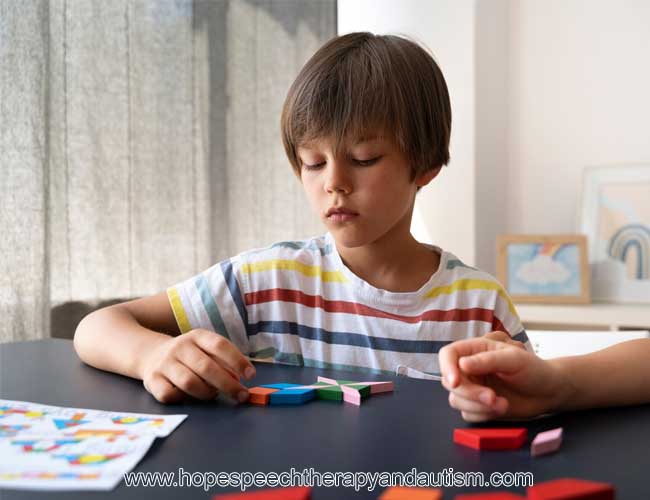
Effective autism support usually begins by understanding how the individual communicates, learns, responds to sensory information, and manages everyday demands. Intervention may include communication therapy, behavioural and developmental strategies, parent coaching, educational support, occupational therapy, and psychological approaches when clinically appropriate. Hope Centre provides coordinated Autism Therapy Services Center support with goals that can be linked to real situations such as following routines, communicating needs, participating in learning, developing social interaction, and becoming more independent. Families in the UK may also work with NHS teams, schools, local authority services, or an Education, Health and Care Plan where eligible. A private or online therapy service does not replace statutory assessment or NHS care, but it can complement existing support and give families additional structured opportunities to practise useful skills consistently.
What Is Special Education and Academic Therapy for Children?
Special education provides teaching and learning support adapted to a child’s individual educational needs, while academic therapy focuses on specific difficulties that interfere with progress in areas such as reading, writing, spelling, attention, comprehension, or mathematics. In the UK, children and young people with special educational needs may receive support through their school’s SEN arrangements, and some children with more significant needs may have an Education, Health and Care Plan. Academic support should therefore work alongside the child’s educational setting rather than operate in isolation. A useful programme identifies where the learner is struggling, breaks complex skills into manageable steps, provides repeated guided practice, and tracks whether the chosen approach is producing improvement. Hope Centre for Speech Therapy and Autism Treatment can support these goals through personalised academic intervention designed around the learner’s developmental level and educational requirements.
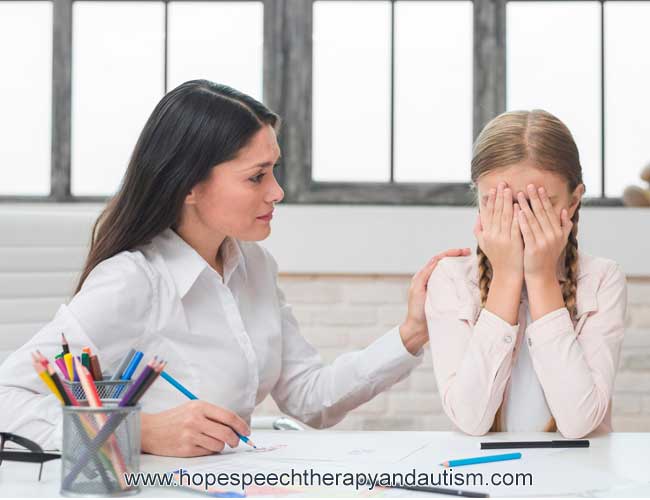
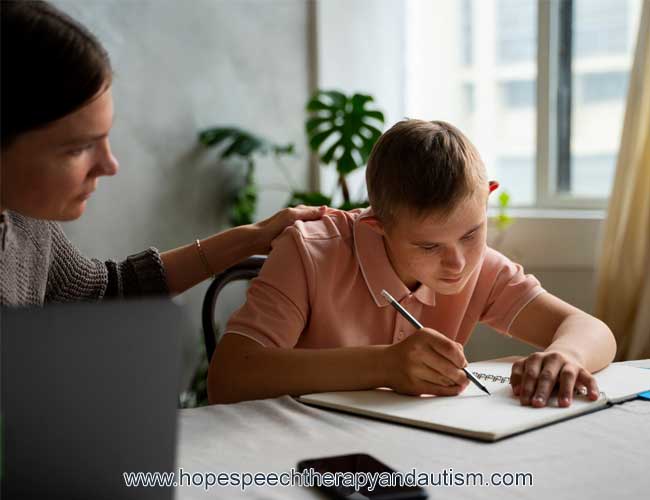
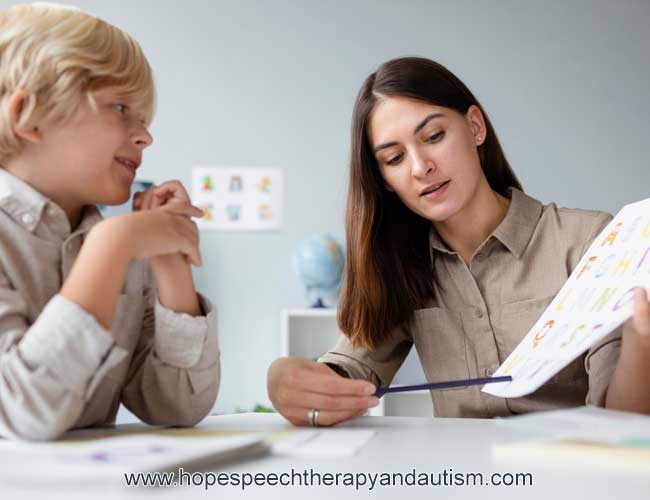
Academic therapy becomes more effective when therapists understand how a child communicates and processes information. For example, a learner with language difficulties may need explicit teaching of vocabulary and comprehension before complex written tasks become manageable, while another child may benefit from structured routines, visual supports, assistive technology, or shorter learning steps. Hope Centre provides Special Education and Academic Therapy support with attention to individual learning profiles, helping children build academic confidence without treating grades as the only measure of progress. Regular communication with parents can make strategies easier to continue at home, and collaboration with teachers can help ensure that therapy goals remain relevant to classroom demands. This coordinated approach can be particularly useful for families looking for an Academic Therapy Centre in UK that understands both developmental and educational needs.
What Is Occupational Therapy and Sensory Integration Therapy, and When Is It Needed?
Occupational therapy helps people develop or maintain skills needed for everyday activities, including dressing, eating, handwriting, play, school participation, and self-care. For children with developmental differences, an occupational therapist may assess motor coordination, fine-motor abilities, posture, attention during tasks, and sensory responses. Sensory integration approaches are used by some occupational therapists to help children participate more effectively when sensory processing differences affect daily activities. Signs that may justify an assessment can include unusually strong reactions to sounds, touch, movement, textures, or visual input, difficulty with coordination, challenges using tools, or problems completing age-appropriate self-care activities. Sensory differences alone do not establish a diagnosis, and therapy should be based on functional difficulties rather than simply trying to normalise a child’s behaviour. Hope Centre can provide structured Occupational Therapy / Sensory Integration Therapy focused on practical participation and individual goals.
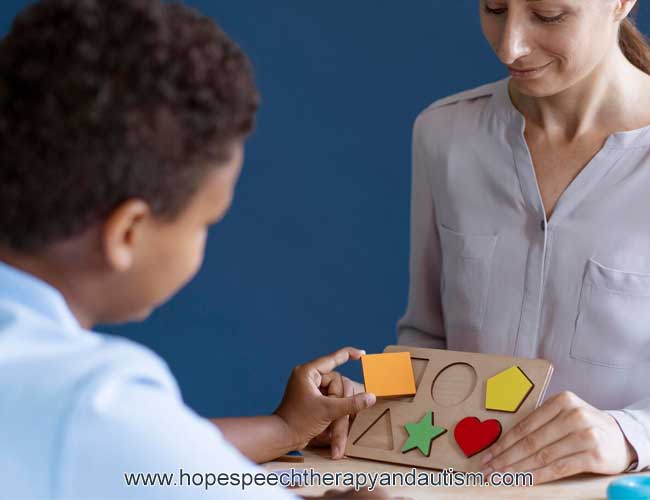
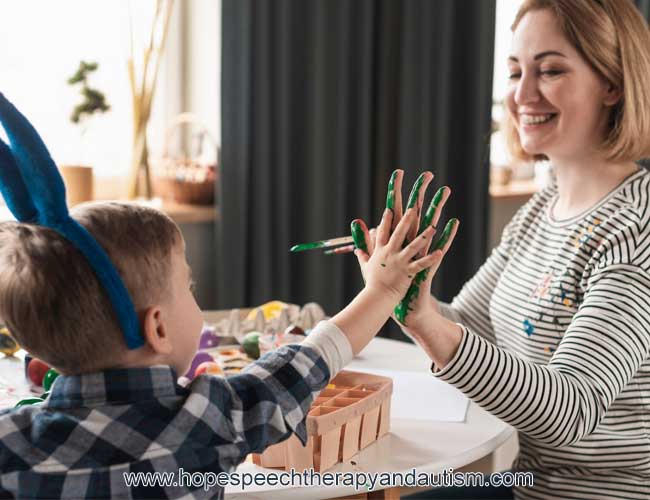


Occupational therapy should connect sensory and motor support to meaningful activities rather than rely on exercises without a clear purpose. A child may work on pencil control because handwriting affects school participation, or practise dressing skills because greater independence is an important family goal. For children with autism, occupational therapy may also address routines, transitions, regulation, and environmental adaptations when these difficulties interfere with participation. Hope Centre offers Occupational Therapy / Sensory Integration Therapy with an emphasis on individual assessment and practical outcomes. Families searching for a Top Occupational Therapy / Sensory Integration Therapy Centre in UK should look for appropriately qualified professionals, clear treatment objectives, regular progress reviews, and communication about what can realistically be achieved. Therapy should complement school and home strategies so that useful skills are practised consistently across environments.
What Is CBT, and How Can Cognitive Behavioral Therapy Support Children?
Cognitive Behavioral Therapy, commonly called CBT, is a structured psychological approach that explores connections between thoughts, feelings, physical responses, and behaviour. It is used for several difficulties, including anxiety and low mood, and may be adapted for children and young people according to their developmental level. CBT does not treat autism itself, but autistic children and young people can experience anxiety or other emotional difficulties for which adapted psychological support may be appropriate. Signs that professional assessment could be useful include persistent worry, avoidance of everyday activities, distress that interferes with school or relationships, difficulty coping with particular situations, or repeated negative thinking. A qualified professional should assess the individual before recommending treatment. Hope Centre for Speech Therapy and Autism Treatment can provide structured CBT-oriented support where appropriate, with therapy goals connected to the person’s actual challenges and daily environment.

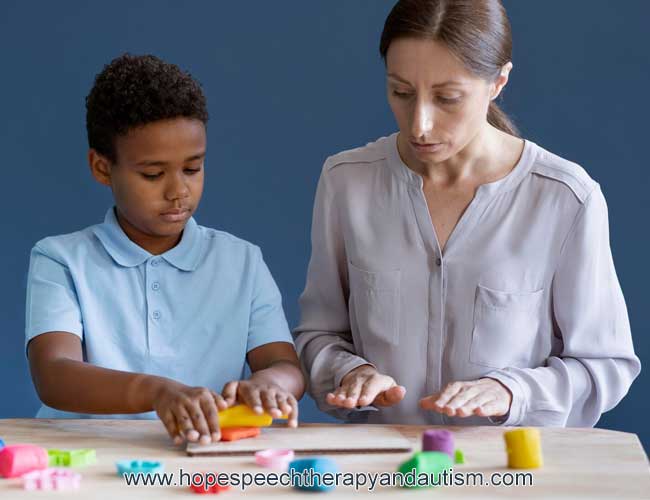

CBT works by helping a person recognise patterns that contribute to distress and learn practical ways to respond differently. For children, therapy may use age-appropriate language, visual tools, role-play, gradual exposure, problem-solving, and parent involvement. For autistic individuals, adaptations may be needed to account for communication style, sensory needs, literal interpretation, and differences in recognising or describing emotions. Hope Centre can build CBT strategies around specific functional goals, such as managing worries, coping with changes, understanding emotional responses, or increasing confidence in challenging situations. For parents looking for a Cognitive Behavioral Therapy Centre in UK, it is important to choose support that is personalised rather than applying a standard programme to every child. Where more complex mental health needs are present, therapy should also be coordinated with appropriate NHS or specialist mental health services.
What Is Hearing Aid Treatment, and How Can You Find the Best Hearing Aid Centre in UK?
Hearing aid treatment begins with understanding the type and degree of hearing loss rather than simply choosing a device. Hearing assessment may involve audiometry and other tests performed by an appropriately qualified hearing professional. If hearing aids are recommended, the device needs to be selected, fitted, programmed, and reviewed according to the individual’s hearing requirements and lifestyle. Children require particular care because hearing access can influence speech, language, learning, and communication development. Hearing loss can present as frequently asking for repetition, difficulty following speech in noise, delayed responses, increasing television volume, or problems hearing at school, although these signs can have other explanations. Hope Centre can support families seeking Hearing Aid Treatment by connecting hearing needs with communication and developmental support, while appropriate audiological assessment remains essential before hearing technology is selected.
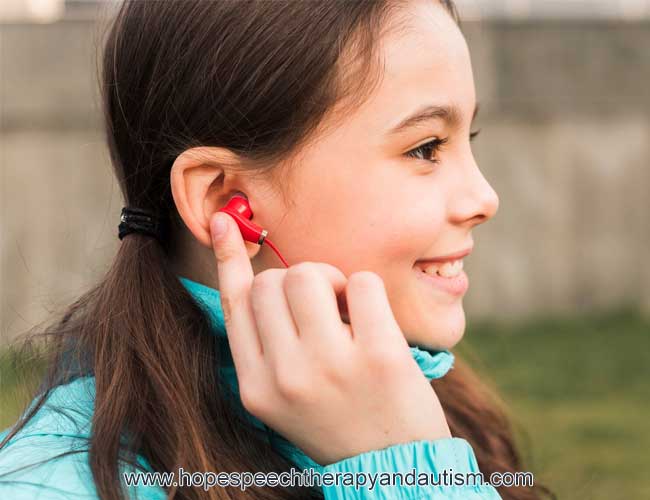
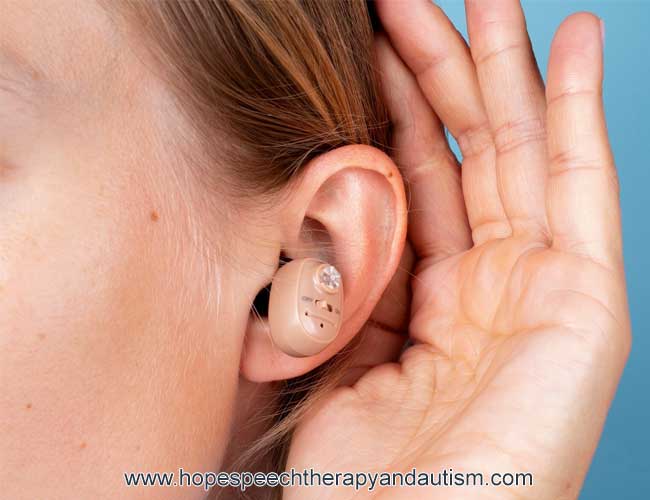
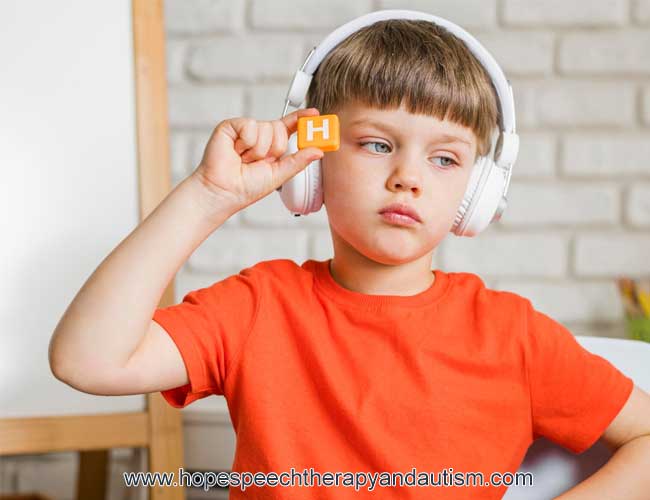

Good hearing aid care does not end when the device is fitted. Users may need time to adjust, follow-up appointments, programming changes, maintenance, and guidance on using hearing technology in different listening environments. Children may also need communication and educational support alongside hearing management, depending on their individual needs. Hope Centre takes a connected approach by recognising that hearing access and communication development can influence one another. Families searching for the Best Hearing Aid Centre in UK should consider professional qualifications, quality of assessment, fitting and follow-up arrangements, and how well the service responds to the user’s specific hearing needs. When hearing difficulties are suspected, timely assessment is worthwhile because addressing hearing access can remove an important barrier to communication and learning.
Are You Ready to Choose the Right Online Autism Treatment & Speech Therapy Centre in UK?
Choosing therapy is an important decision, especially when a child or young person has several connected needs. Speech and language difficulties can affect classroom participation, autism can influence communication and flexibility, sensory challenges can interfere with everyday activities, academic difficulties can reduce confidence, anxiety can limit participation, and hearing loss can affect access to spoken information. These needs should be considered together rather than treated as unrelated problems. An Online Autism Treatment & Speech Therapy Centre in UK can offer families a practical way to access structured support while maintaining continuity between sessions and everyday routines. Hope Centre for Speech Therapy and Autism Treatment brings multiple areas of developmental support together so that intervention can remain focused, personalised, and useful in real life.
If you are looking for professional support for speech, autism, special education, sensory needs, CBT, or hearing-related concerns, the next step is to discuss the individual’s needs and determine which assessments and services are appropriate. Hope Centre for Speech Therapy and Autism Treatment can help families understand their available therapy options and develop a focused plan around communication, learning, independence, and participation. Contact the centre to discuss your requirements, ask about online sessions, and take the first practical step towards consistent support tailored to your child or family member.