
Are You Looking for an Online Autism Treatment & Speech Therapy Centre in Lisbon?
Finding the right support for speech, communication, learning, behaviour, sensory needs, or hearing can feel overwhelming, especially when families in Lisbon are trying to coordinate different specialists. An online model can make that process more convenient by allowing therapy sessions, parent guidance, progress discussions, and home-based activities to fit around school and family routines. The Online Autism Treatment & Speech Therapy Centre in Lisbon approach is particularly useful for families who want structured professional support without making every appointment dependent on travel. It can also be valuable for Portuguese-speaking families who want consistent communication and practical guidance from therapists. Hope Centre for Speech Therapy and Autism Treatment supports families through a coordinated approach that focuses on the individual's actual needs rather than applying the same plan to everyone. From speech and autism support to academic therapy, sensory integration, CBT, and hearing-related guidance, the goal is to build useful skills that can carry into everyday life.
What Is Speech Therapy, and Which Symptoms Can It Treat?
Speech therapy is not limited to helping a child pronounce words correctly. It addresses communication, language understanding, expressive language, speech sounds, fluency, voice, and social communication. A child may benefit from assessment when they have difficulty forming age-appropriate sentences, understanding instructions, finding words, answering questions, following conversations, or being understood by others. Some children may use very few words, repeat phrases, rely heavily on gestures, or struggle to communicate their needs. Speech-language therapy can also support children with autism, developmental language disorder, articulation difficulties, stuttering, and communication problems associated with other developmental conditions. In Lisbon, families may choose online sessions when regular travel is difficult. Hope Centre for Speech Therapy and Autism Treatment provides structured speech therapy based on individual communication goals, with activities that parents can continue between sessions so that progress is not restricted to the therapy appointment.


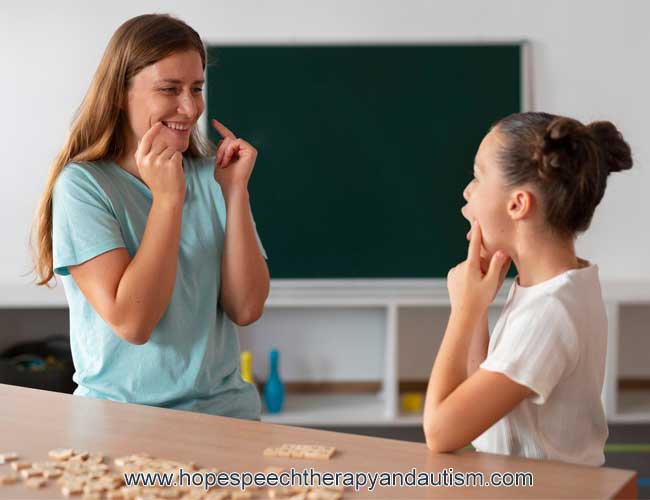
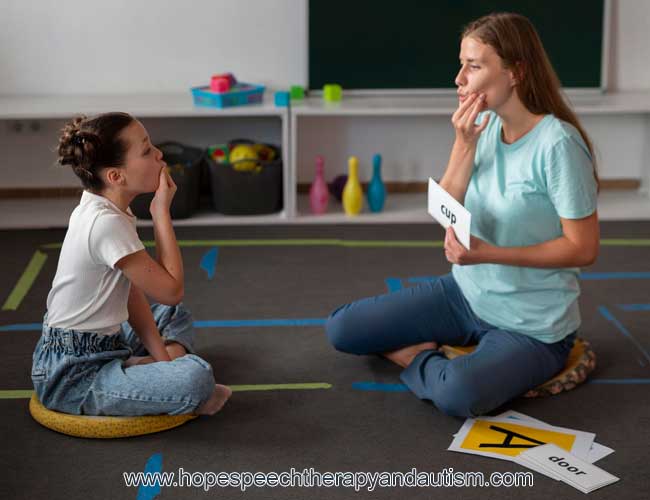
Effective speech therapy begins with assessment rather than assumptions. The therapist considers receptive and expressive language, speech clarity, communication intent, interaction, and functional needs before setting goals. Treatment may include modelling language, expanding vocabulary, practising sounds, improving sentence structure, strengthening conversational skills, or introducing alternative and augmentative communication when appropriate. Hope Centre uses therapy plans that can be adapted as the child develops, with families encouraged to practise communication during meals, play, schoolwork, and everyday conversations. For families searching for speech therapy services in Lisbon, online support can also reduce missed sessions and make it easier for parents to observe techniques directly. The most meaningful outcome is not simply completing exercises correctly; it is helping the child communicate more independently and confidently in real situations.
What Is Autism, and What Symptoms and Treatments Should Families Know About?
Autism is a neurodevelopmental condition that affects communication, social interaction, behaviour, and patterns of interests or activities. It is a spectrum, so children can have very different abilities and support needs. Possible signs include differences in eye contact or social interaction, delayed or unusual language development, repetitive movements, intense interests, difficulty with changes in routine, and unusual responses to sounds, textures, lights, or other sensory experiences. Some children speak fluently but find social communication difficult, while others may communicate with gestures, pictures, or assistive communication systems. Autism is not caused by poor parenting, and there is no single treatment that works for every child. A comprehensive Online Autism Treatment & Speech Therapy Centre in Lisbon should therefore focus on functional goals, communication, independence, learning, and family involvement rather than trying to make every child behave in exactly the same way.

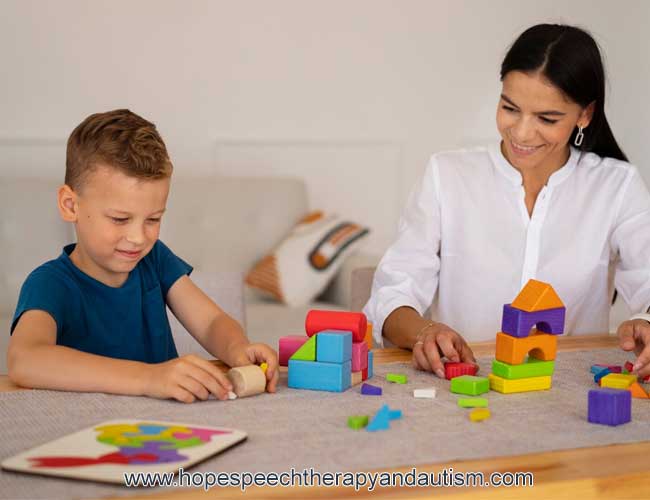
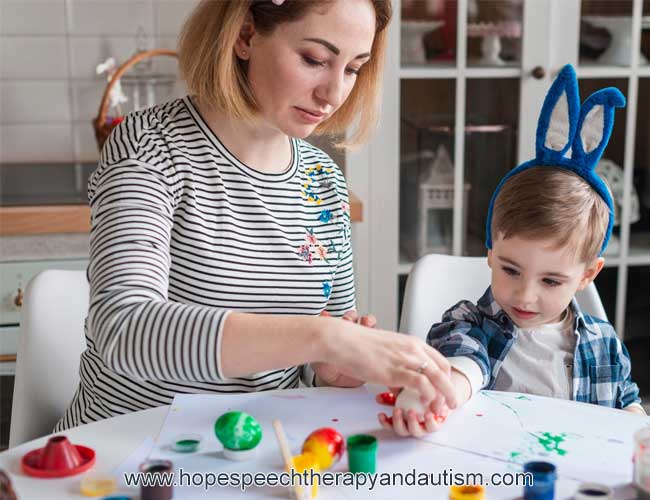
Autism treatment is best understood as personalised developmental support. Depending on the child's needs, intervention may include speech therapy, behavioural and developmental strategies, occupational therapy, social communication work, academic support, parent coaching, and psychological support. Hope Centre for Speech Therapy and Autism Treatment brings these areas together so that goals can be coordinated rather than treated as unrelated problems. For a child in Lisbon, a useful plan may focus on functional communication, following routines, managing transitions, participating in classroom activities, developing self-care skills, or building social understanding. Progress should be measured through observable changes in daily functioning, not only through therapy worksheets. Families should also expect regular review of goals because a child's strengths, challenges, and priorities can change over time.
What Is Special Education and Academic Therapy for Children Who Need Extra Support?
Special education provides individualised educational support for learners whose developmental, communication, cognitive, behavioural, or sensory needs affect access to learning. Academic therapy takes this idea further by identifying the specific skills that are interfering with progress and then teaching them systematically. A child may understand a lesson but struggle to read, write, spell, organise work, remember instructions, maintain attention, or complete tasks independently. In these cases, repeating the same schoolwork is often not enough. An assessment can help identify whether the main difficulty involves literacy, language processing, working memory, executive functioning, attention, or another learning-related factor. Families in Lisbon can use online academic therapy to supplement school support, particularly when the child benefits from a quieter environment and highly individualised instruction.


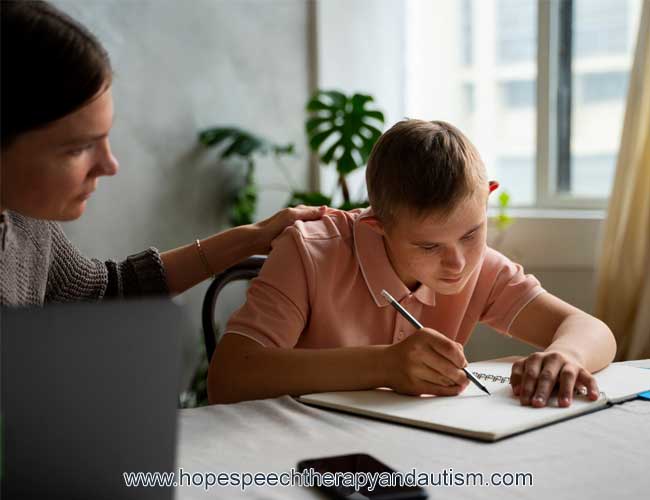
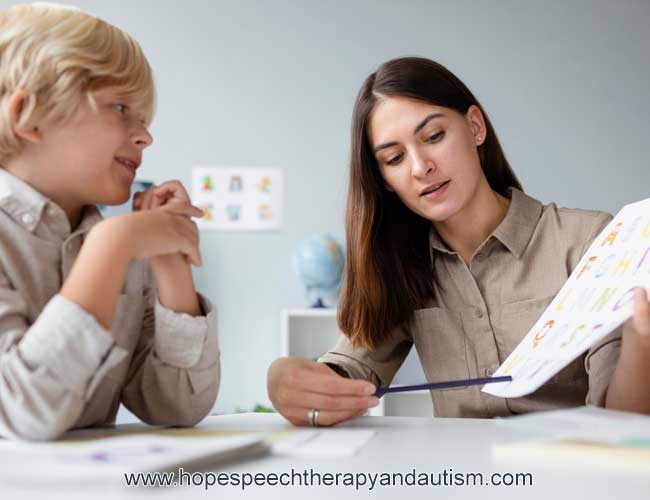
Hope Centre supports academic development by breaking difficult skills into manageable steps and adjusting teaching methods according to the learner's profile. Intervention may include reading comprehension, phonological awareness, writing organisation, mathematics, study habits, attention strategies, or executive-function skills. The objective is to help the learner become more independent rather than permanently dependent on one-to-one assistance. For families looking for special education support in Lisbon, coordination between therapists, parents, and school professionals can make goals more consistent across environments. Online sessions can also give parents a clearer understanding of how to support homework and daily learning without turning the home into another classroom. With appropriate assessment and regular progress reviews, academic therapy can address specific barriers while building confidence and participation in education.
What Is Occupational Therapy and Sensory Integration Therapy, and When Is It Needed?
Occupational therapy helps children develop the practical skills needed for everyday activities, participation, and independence. It may be appropriate when a child has difficulty with dressing, feeding, handwriting, using classroom materials, coordinating movements, maintaining posture, or completing age-appropriate self-care tasks. Sensory integration therapy is used within occupational therapy when sensory processing differences affect participation. A child may become overwhelmed by particular sounds, textures, movement, touch, or visual input, while another may actively seek intense movement or pressure. These responses are not simply signs of being difficult; they can influence attention, emotional regulation, and the ability to participate in routines. For families in Lisbon, an online occupational therapy model can include caregiver coaching, environmental adjustments, home activities, and strategies that are practical within the child's existing routines.
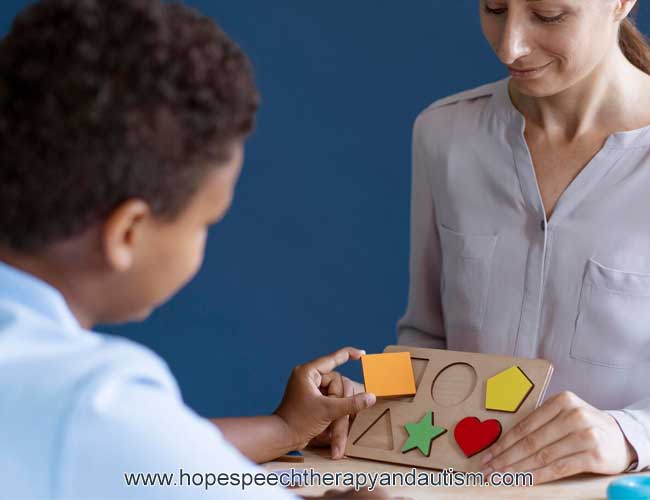
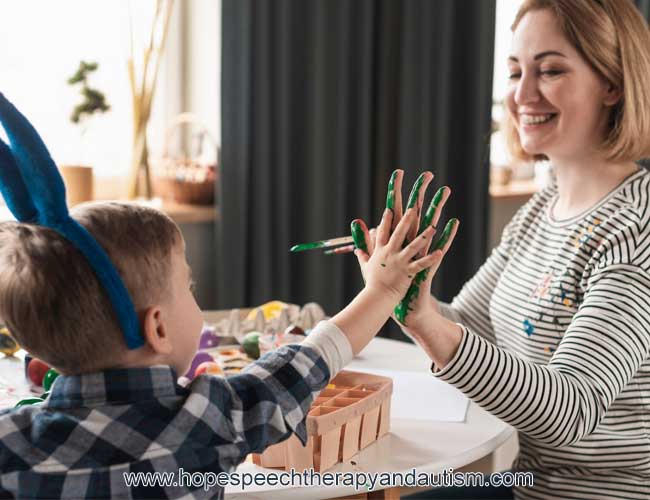


Hope Centre focuses occupational therapy on functional outcomes rather than sensory activities for their own sake. A therapist may look at how sensory processing, motor planning, coordination, or regulation affects a child's ability to learn, play, communicate, and manage daily routines. The programme can then be adapted to the child's strengths and specific challenges. Families searching for an occupational therapy or sensory integration therapy centre in Lisbon can benefit from guidance that explains what to practise, how often to practise it, and what changes to observe. Parents can also learn how to modify the home environment, organise transitions, and provide appropriate opportunities for movement or regulation. When occupational therapy is coordinated with speech, autism, and academic support, the child receives a more consistent plan across communication, learning, behaviour, and daily living skills.
What Is CBT, and How Can Cognitive Behavioral Therapy Support Children and Families?
Cognitive Behavioral Therapy, commonly called CBT, is a structured psychological approach that examines the relationship between thoughts, feelings, and behaviours. It can help children and adolescents who experience anxiety, emotional regulation difficulties, negative thinking patterns, social worries, frustration, or behaviour that interferes with daily functioning. CBT is not a treatment for autism itself, but it can address specific emotional or behavioural difficulties that may occur alongside autism or other developmental needs. For younger children, CBT is often adapted through visual tools, games, stories, role-play, and parent involvement. A therapist may teach a child to recognise emotions, identify triggers, practise coping strategies, and gradually approach situations that cause unnecessary fear or avoidance. Online CBT can be particularly convenient for families in Lisbon when sessions need to fit around school schedules and other therapy appointments.

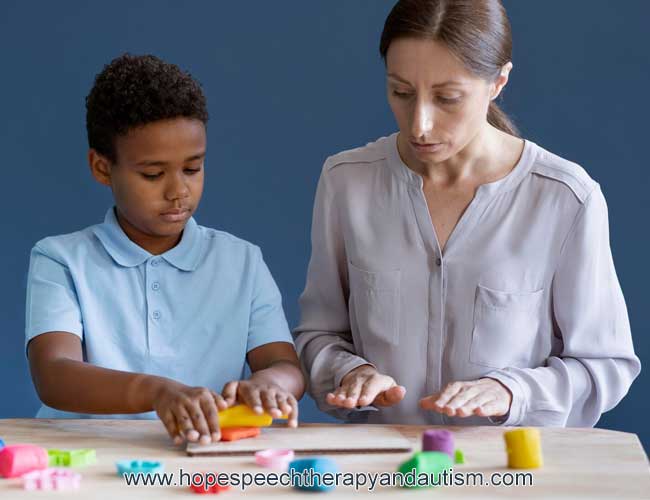


Hope Centre provides CBT with practical goals that can be connected to the child's everyday life. Instead of discussing emotions only during a session, the therapist can help the child practise coping skills that can be used before school, during social situations, while completing difficult tasks, or when routines change. Parents may also receive guidance on responding consistently to anxiety, avoidance, frustration, or emotional outbursts. A suitable Cognitive Behavioral Therapy programme in Lisbon should be based on assessment and adapted to developmental level, communication ability, and family priorities. Progress can be reviewed through changes in specific behaviours and the child's ability to use coping strategies more independently. CBT works best when the therapist, child, and family share clear goals and when newly learned strategies are practised between sessions.
What Is Hearing Aid Treatment, and How Can You Find the Best Hearing Aid Centre in Lisbon?
Hearing aid treatment begins with identifying the type and degree of hearing loss rather than simply selecting a device. Hearing difficulties may appear as frequently asking others to repeat themselves, difficulty following speech in noisy environments, unclear responses to questions, delayed speech and language development in children, or reduced awareness of environmental sounds. A proper hearing assessment is therefore essential before fitting a hearing aid. Hearing aids are electronic devices that amplify and process sound according to the user's hearing needs, but they do not restore normal hearing or work equally for every type of hearing loss. Children require particular attention because untreated hearing difficulties can affect speech, language, learning, and social participation. Families in Lisbon should work with qualified hearing professionals for assessment, fitting, verification, follow-up, and ongoing device adjustments rather than treating the hearing aid as a one-time purchase.


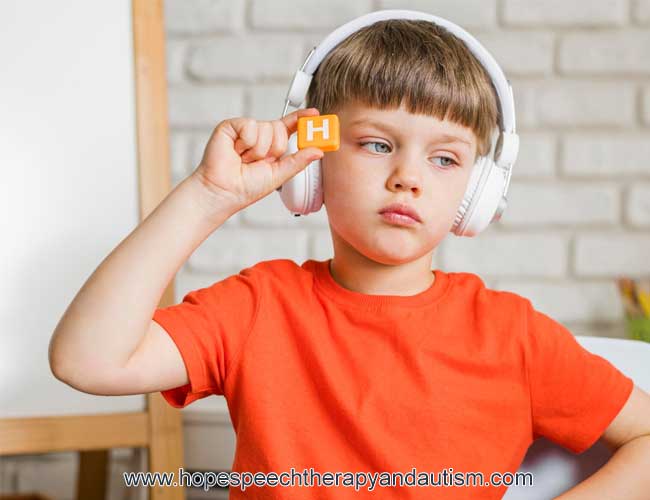

Hope Centre for Speech Therapy and Autism Treatment can support families by helping them understand how hearing, communication, and developmental needs can interact. For children with hearing difficulties, communication goals may need to be coordinated with speech-language therapy and educational support so that the child has the best opportunity to participate in learning and everyday conversations. Families looking for a hearing aid treatment centre in Lisbon should ask about assessment, device selection, fitting, follow-up appointments, maintenance, and communication support. Online professional guidance can also be useful for explaining home strategies and monitoring concerns, although hearing tests and physical device fitting may require an appropriate local hearing professional. The important point is to treat hearing loss as part of the person's overall communication needs rather than viewing the hearing device in isolation.
Are You Ready to Choose the Right Online Therapy Support in Lisbon?
Children and families rarely have only one need. A child with autism may also need speech therapy, sensory support, academic assistance, emotional regulation strategies, or help with hearing and communication. That is why choosing a coordinated Online Autism Treatment & Speech Therapy Centre in Lisbon can make the overall process easier to understand and manage. Hope Centre for Speech Therapy and Autism Treatment provides personalised support across these areas, with a focus on practical skills, family participation, measurable goals, and everyday independence. Online therapy can also make professional guidance more accessible to families who need flexible scheduling or who want to participate directly in sessions. If you are concerned about your child's communication, development, learning, sensory needs, emotional wellbeing, or hearing, take the next step by arranging an assessment and discussing the child's specific needs with the appropriate professional. Early, consistent, and individualised support can make therapy more meaningful and help families move forward with greater confidence.