
Are You Looking for an Online Autism Treatment & Speech Therapy Centre in Fresno?
Finding the right developmental and therapeutic support can make everyday communication, learning, behaviour, and independence easier for children and families. An online Autism Treatment & Speech Therapy Centre in Fresno can provide structured professional guidance without requiring families to travel for every session. This can be especially useful for families balancing school, work, appointments, and other responsibilities. Hope Centre for Speech Therapy and Autism Treatment focuses on individualized care, helping children work toward practical goals such as clearer communication, stronger social interaction, improved attention, better learning skills, and greater independence. Online therapy can also make it easier for parents to participate in sessions and understand how to continue therapeutic activities at home. Fresno families also have access to established local educational and developmental support systems, making coordination between therapy, school, and family goals an important part of effective care.
This guide explains six important areas of support: speech therapy, autism treatment, special education and academic therapy, occupational and sensory integration therapy, cognitive behavioral therapy, and hearing aid treatment. Each service addresses different needs, so a child does not necessarily require every type of intervention. A proper assessment should determine which services are appropriate and what goals should be prioritized. Hope Centre for Speech Therapy and Autism Treatment can help families understand these needs and develop a practical therapy approach based on the child's abilities, challenges, age, communication level, and learning requirements. For Fresno families considering online care, the goal should not simply be to attend sessions, but to choose a structured program where progress can be monitored and therapy strategies can be carried into daily routines.
What Is Speech Therapy, and What Symptoms Can It Treat?
Speech therapy addresses difficulties involving communication, speech sounds, language, fluency, voice, and in some cases swallowing. Children may need support when they have limited vocabulary, difficulty forming sentences, unclear pronunciation, trouble understanding language, difficulty answering questions, or problems using communication appropriately with others. Speech-language therapy is not limited to helping a child pronounce words correctly; it can also build receptive language, expressive language, social communication, and functional communication skills. For children with autism, speech therapy may focus on requesting, answering, turn-taking, conversation, understanding instructions, and using alternative or augmentative communication when appropriate. Hope Centre for Speech Therapy and Autism Treatment provides individualized speech therapy designed around measurable communication goals. Online sessions can also involve parents so that communication strategies can be practiced during normal activities at home.

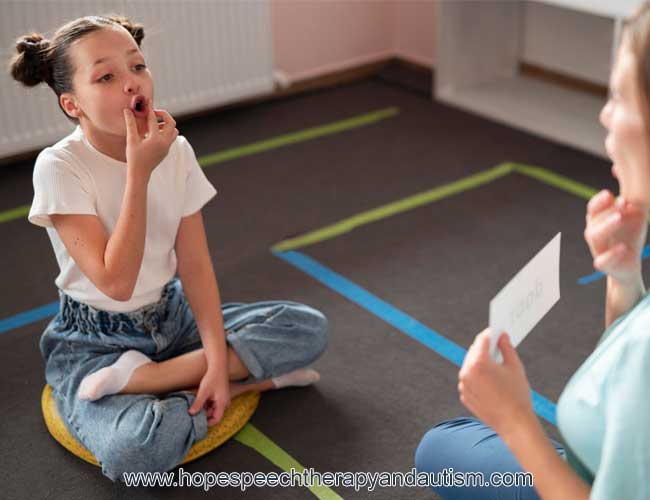
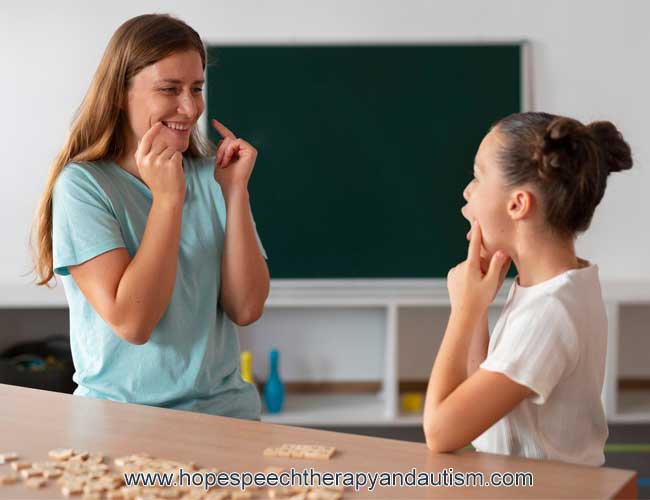
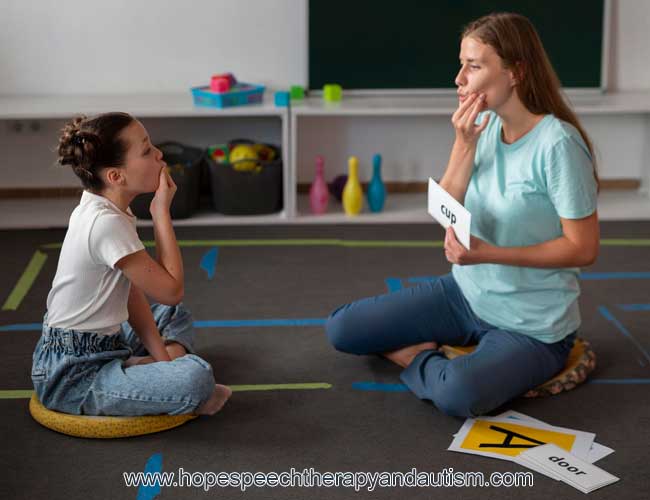
Effective speech treatment begins with identifying the specific communication difficulty rather than applying the same exercises to every child. A speech-language pathologist may assess articulation, receptive and expressive language, fluency, voice, pragmatic communication, and functional communication needs before creating therapy goals. For a child who understands more than they can express, treatment may emphasize vocabulary and sentence development. For another child, the priority may be social communication or an alternative communication system. Hope Centre takes a goal-focused approach so therapy can address meaningful situations such as communicating with parents, participating in school activities, following instructions, and interacting with peers. Families in Fresno can also discuss how online therapy fits alongside school-based services and other professional support when more than one provider is involved.
What Is Autism, and What Symptoms and Treatment Can Help?
Autism spectrum disorder is a neurodevelopmental condition associated with differences in social communication and interaction, together with restricted or repetitive patterns of behaviour, interests, or activities. Signs can vary considerably from one child to another. Some children may have delayed spoken language, difficulty maintaining social interaction, repetitive movements, strong preferences for routines, unusual responses to sounds or textures, or difficulty adapting to changes. Autism is not identified from one behaviour alone, and diagnosis requires an appropriate developmental evaluation. Autism treatment therefore needs to be individualized rather than based on a single standard program. Hope Centre for Speech Therapy and Autism Treatment supports children by targeting functional communication, social participation, learning readiness, adaptive skills, and other areas identified through assessment. The aim is to develop useful skills while respecting the child's individual strengths and needs.
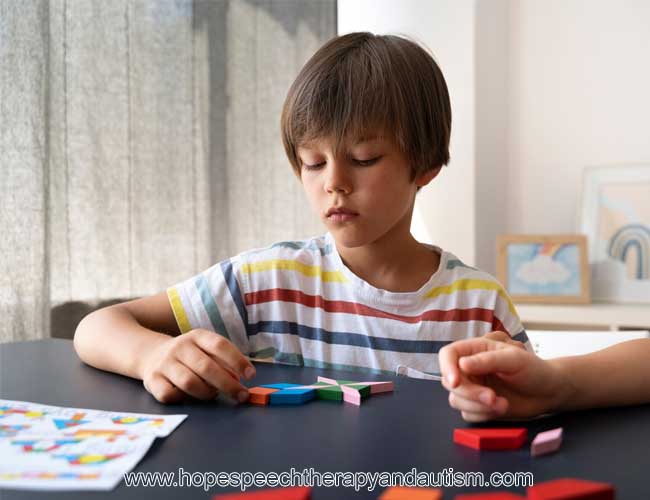
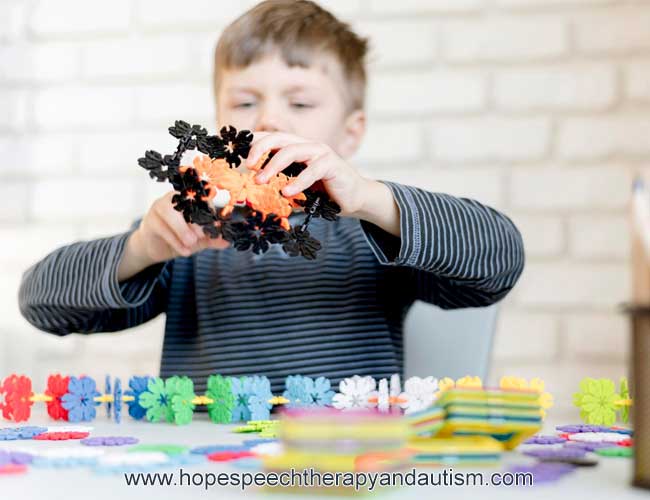
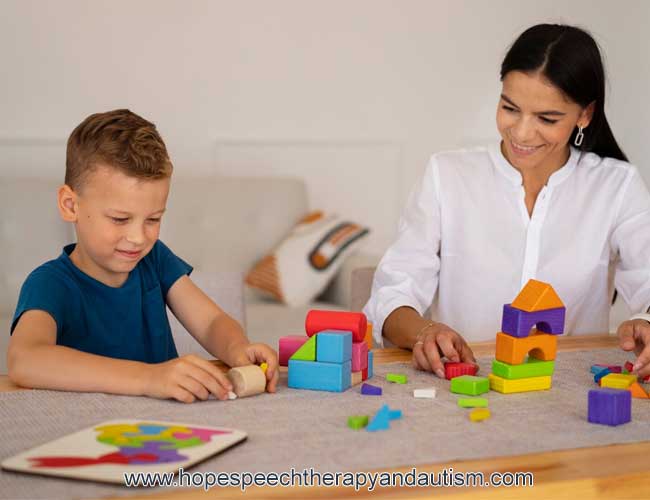
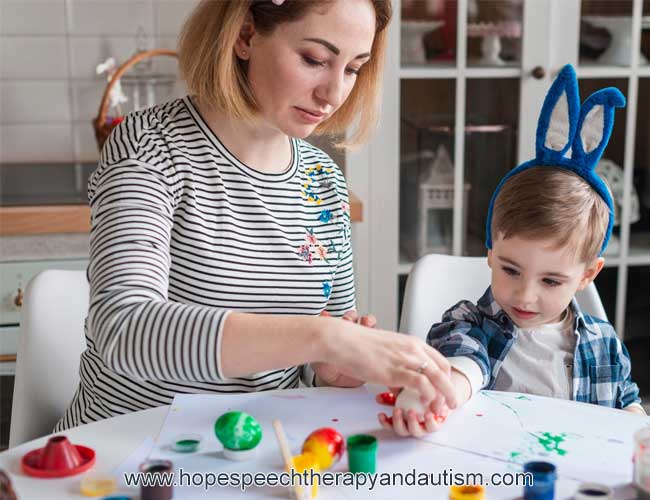
Autism intervention can include speech-language therapy, behavioural support, occupational therapy, educational intervention, social skills work, and parent training depending on the individual's needs. The purpose is not to change a child's identity, but to improve functional abilities and reduce barriers that interfere with communication, learning, relationships, safety, or independence. Hope Centre can work with families on practical objectives such as increasing functional communication, improving participation in activities, developing social understanding, strengthening routines, and supporting emotional or behavioural regulation. For young children in Fresno County, families may also encounter California's Early Start system and Central Valley Regional Center when seeking developmental support. This makes early assessment and coordination particularly valuable when a child shows developmental concerns, because appropriate services can be considered without waiting for difficulties to become more pronounced.
What Are Special Education and Academic Therapy, and How Can They Help?
Special education provides individualized educational support for students whose disabilities affect their access to learning, while academic therapy focuses more specifically on developing skills needed for successful learning. Depending on the student's needs, support may address reading, writing, mathematics, attention, organization, language processing, study skills, or classroom participation. Special education services are generally based on educational needs and, when applicable, an Individualized Education Program. Fresno Unified School District provides a range of special education programs and services, with many supports delivered through local schools and general education collaboration. Fresno County also has a Special Education Local Plan Area structure supporting districts and educational services. Understanding the difference between school-based special education and private academic therapy helps families choose appropriate support. Hope Centre can complement educational goals by working on the underlying communication, academic, and functional skills that a child needs to participate more successfully in learning.
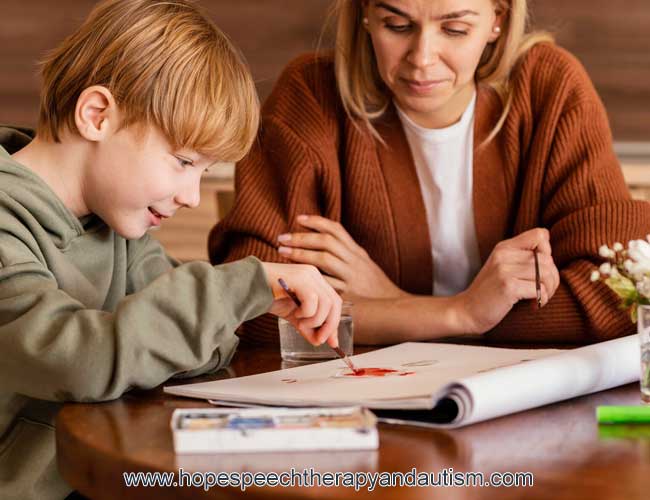
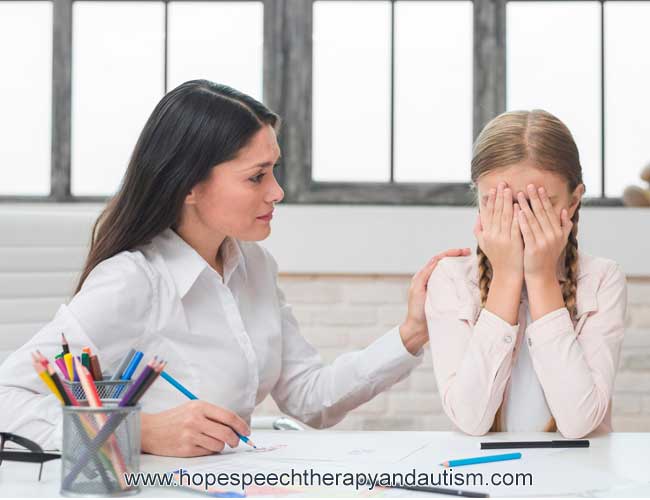
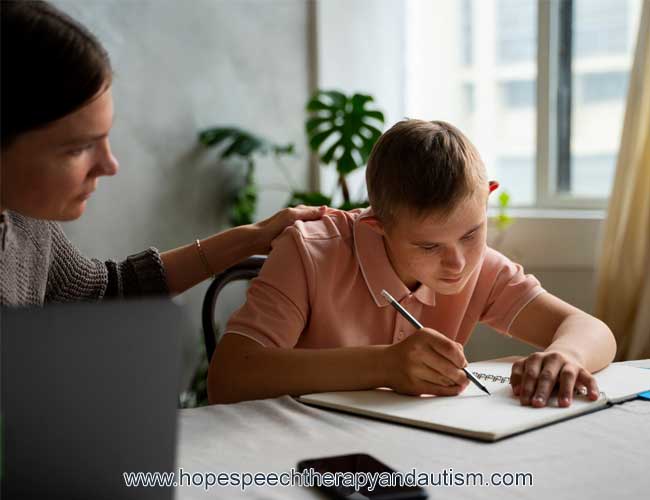
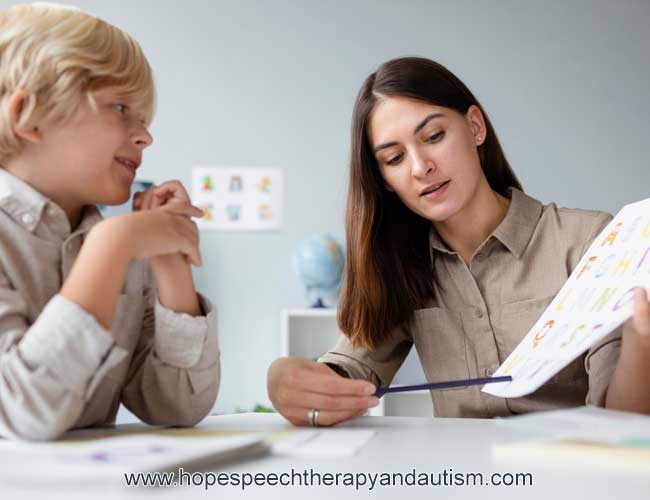
Academic therapy becomes more useful when goals are specific and connected to the learner's actual difficulties. A child struggling with reading may require systematic instruction in phonological awareness, decoding, fluency, and comprehension, while another student may need support with written expression, mathematical reasoning, attention, or executive functioning. Hope Centre for Speech Therapy and Autism Treatment can provide individualized academic support while keeping communication and developmental needs in view. For Fresno families, this approach can work alongside school-based services rather than replacing them. The Fresno County SELPA and local districts coordinate educational supports, and families should review their child's educational plan to understand what services are available through the school. Private therapy can then focus on additional goals or practice that fits the child's individual learning profile and helps transfer newly developed skills into homework, classroom activities, and everyday academic situations.
What Is Occupational Therapy and Sensory Integration Therapy, and When Is It Needed?
Occupational therapy helps children develop the skills needed for everyday activities, participation, and independence. Depending on the assessment, treatment may address fine motor skills, handwriting, dressing, feeding, coordination, attention, play, self-care, or functional participation. Some children also have sensory processing differences, such as becoming overwhelmed by particular sounds, textures, movement, lights, or touch. Sensory integration approaches may be used by qualified occupational therapists when sensory responses interfere with daily functioning. Treatment should be individualized and connected to functional goals rather than simply providing sensory activities without a clear purpose. Hope Centre can help families identify practical occupational therapy goals and build activities around the child's daily needs. For a child with autism or developmental differences, occupational therapy may complement speech and educational intervention by supporting the physical, sensory, and self-care abilities required for successful participation.
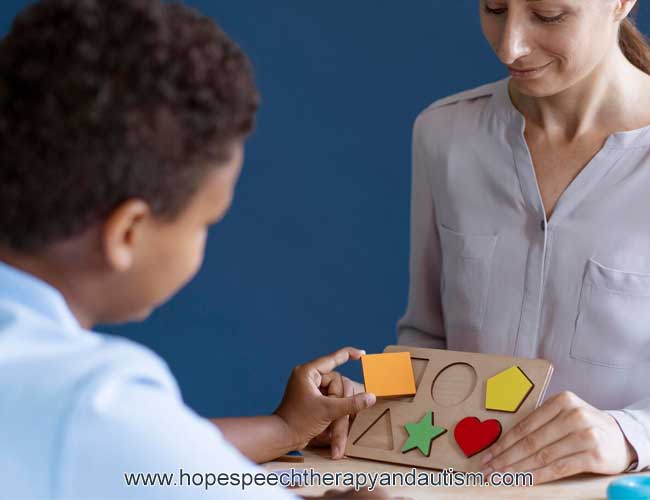
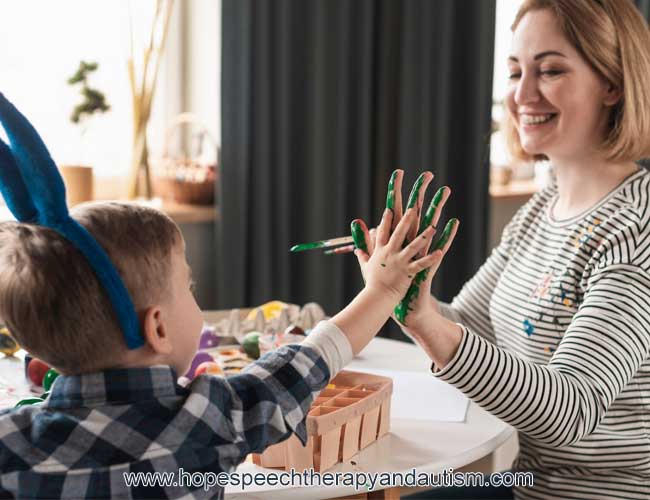

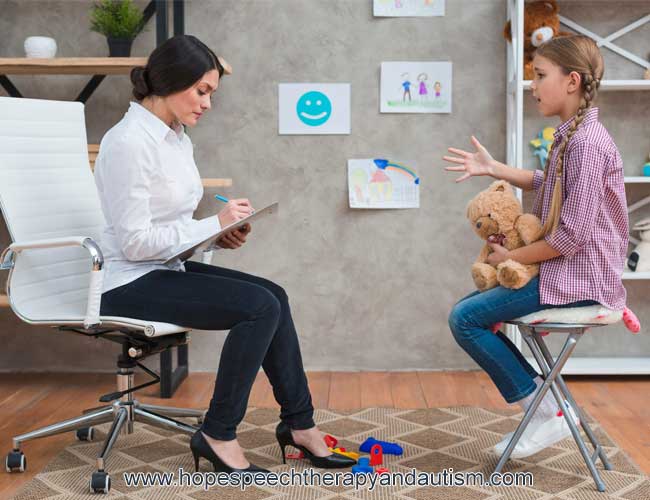
Occupational therapy treatment should begin with a clear understanding of what the child finds difficult and how that difficulty affects daily life. A therapist may examine motor coordination, functional hand use, sensory responses, posture, self-care, play, or classroom participation before selecting interventions. Hope Centre for Speech Therapy and Autism Treatment can integrate occupational therapy goals with broader developmental objectives so that improvements are useful outside the therapy session. For example, improving fine motor control can support handwriting and dressing, while addressing sensory regulation may help a child remain engaged during learning or social activities. Online services may be appropriate for some goals when a therapist can coach parents through home-based activities, although some situations require direct in-person assessment or treatment. Families should therefore discuss the child's specific needs before choosing the most suitable therapy format.
What Is CBT, and How Can Cognitive Behavioral Therapy Help?
Cognitive Behavioral Therapy, commonly called CBT, is a structured psychological approach that helps people understand the relationship between thoughts, emotions, and behaviours. It can be used for concerns such as anxiety, fears, emotional regulation difficulties, negative thinking patterns, and certain behavioural challenges. CBT is not a treatment for autism itself, but it may help an autistic child or adolescent manage co-occurring emotional or behavioural difficulties when delivered by a suitably qualified professional. Treatment is adapted to developmental level, communication abilities, and individual needs. Hope Centre for Speech Therapy and Autism Treatment can support children with structured strategies that encourage emotional awareness, coping skills, problem-solving, and more functional responses to challenging situations. For children who have difficulty identifying or communicating emotions, therapy may also incorporate visual supports, concrete examples, predictable routines, and parent involvement to make psychological strategies easier to understand and use.

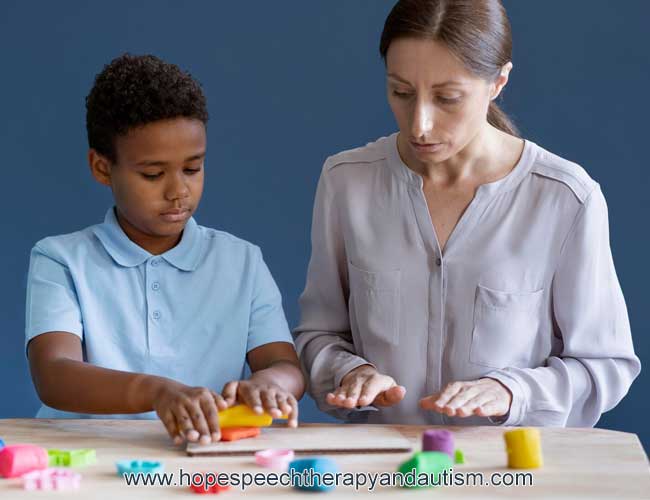
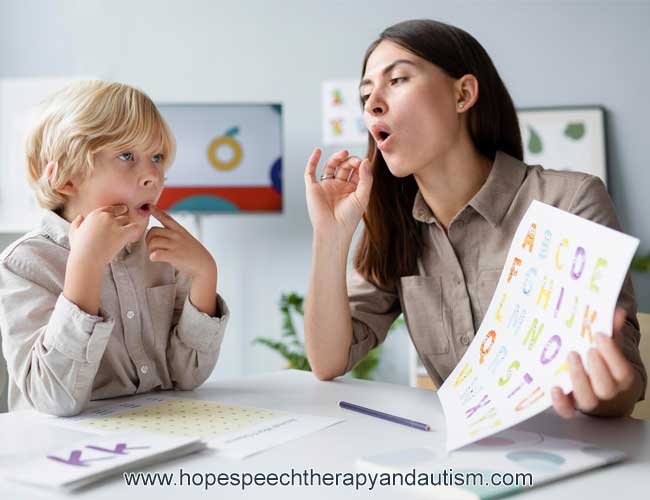

Good CBT is practical and goal-oriented. Instead of simply discussing difficult experiences, the therapist helps the child recognize patterns, learn coping techniques, practice alternative responses, and gradually apply those skills in real situations. For example, treatment may help a child understand what happens before an anxiety response, identify the feeling, use a coping strategy, and then return to the activity. Hope Centre can work with families to reinforce these strategies outside sessions, which is important because emotional and behavioural skills become more useful when they are practiced consistently at home and in other familiar environments. Fresno families seeking CBT should consider the therapist's qualifications, experience with children, and understanding of neurodevelopmental differences. When several therapies are involved, communication between providers can also reduce conflicting approaches and keep the child's treatment goals consistent.
What Is Hearing Aid Treatment, and Where Can You Find the Best Hearing Aid Centre?
Hearing aid treatment begins with identifying the type and degree of hearing loss through appropriate hearing assessment. Hearing difficulties can affect speech and language development, classroom participation, communication, and social interaction, particularly when they occur during childhood. Symptoms may include frequently asking others to repeat themselves, difficulty understanding speech in background noise, turning the television volume up, delayed responses to spoken instructions, or unclear speech when hearing loss affects language development. Hearing aids do not restore normal hearing, but properly fitted devices can improve access to sound for many people with hearing loss. Hope Centre for Speech Therapy and Autism Treatment can help families understand how hearing and communication are connected and can coordinate speech-language goals with hearing-related support. For children, professional audiological assessment and appropriate device selection remain essential before beginning any hearing aid program.
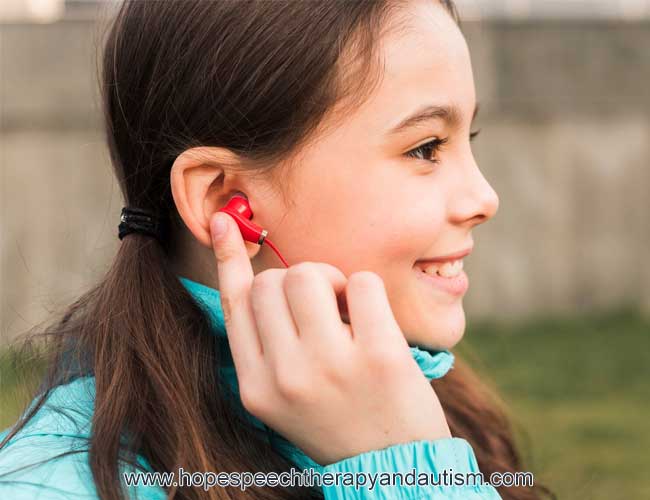
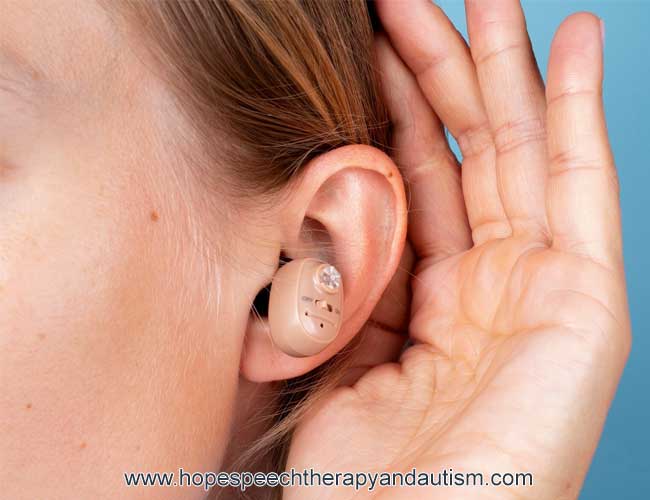
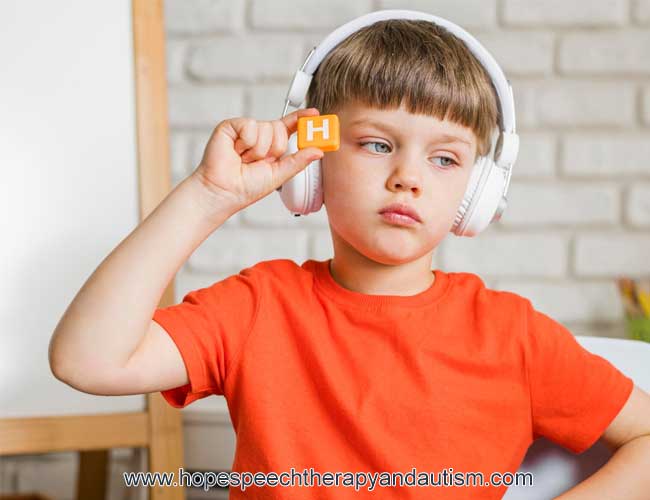

Choosing hearing aid treatment should involve more than selecting a device. An audiologist or other appropriately qualified hearing professional should evaluate hearing levels, discuss communication needs, consider the person's lifestyle, and provide fitting and follow-up support. Children may also require ongoing monitoring because hearing needs can change as they grow. In Fresno County, educational systems can provide specialized support for students with hearing-related needs, and school-based services may work alongside private clinical care. Hope Centre can complement this process by addressing communication development and helping families understand how hearing access may influence speech and language goals. A coordinated approach is particularly valuable when hearing loss occurs alongside autism, speech-language difficulties, or learning challenges. Families should seek a complete assessment rather than assuming that unclear speech or limited communication automatically results from autism or another developmental condition.
Are You Ready to Choose the Right Therapy Support in Fresno?
Choosing therapy is an important decision, and the most effective starting point is a clear understanding of the child's individual needs. Speech therapy may improve communication, autism intervention can support functional development, academic therapy can strengthen learning, occupational therapy can build everyday skills, CBT can address emotional and behavioural challenges, and hearing treatment can improve access to sound when hearing loss is present. These services are different, but they can complement one another when goals are carefully coordinated. Fresno families can also consider the wider network of school-based and developmental resources available in the community. Hope Centre for Speech Therapy and Autism Treatment offers families a structured place to discuss concerns, identify appropriate therapy goals, and build a personalized support plan. If you are looking for an Online Autism Treatment & Speech Therapy Centre in Fresno, connect with Hope Centre to discuss your child's needs and take the next practical step toward meaningful progress.