
Are You Looking for an Online Autism Treatment & Speech Therapy Centre in Copenhagen?
Finding the right support for communication, learning, behaviour, sensory needs, or hearing can be difficult when families are already managing school, work, and everyday responsibilities. An online autism treatment and speech therapy centre can make specialist guidance easier to access, particularly when regular travel to appointments is difficult. For families in Copenhagen, it is also useful to understand how private therapy can complement Denmark’s existing municipal and healthcare services. Copenhagen Municipality provides special education support for children with autism, ADHD, speech and language difficulties, and hearing loss, while its cross-disciplinary support system includes psychologists, support educators, speech and hearing consultants, and health professionals. Hope Centre for Speech Therapy and Autism Treatment can provide structured online support alongside the wider care journey, with therapy planned around individual communication, developmental, academic, behavioural, sensory, and hearing-related needs.
This guide explains six important areas of support and what families can realistically expect from therapy. It covers speech therapy, autism support, special education and academic therapy, occupational and sensory integration therapy, cognitive behavioural therapy, and hearing aid treatment. The goal is not to promise a single solution for every child or adult, but to explain how evidence-informed intervention can target specific functional difficulties. For autism in particular, Danish health guidance recognises the importance of communication support, social development, psychoeducation, special education, and treatment of associated difficulties rather than claiming that autism itself can be cured. Hope Centre focuses on practical goals, family involvement, consistent sessions, and strategies that can be carried into home and educational settings.
What Is Speech Therapy, and Which Symptoms Can It Treat?
Speech therapy helps children and adults develop clearer communication and functional language skills. Difficulties may involve delayed speech, unclear pronunciation, limited vocabulary, difficulty understanding language, problems forming sentences, stammering, or challenges using communication appropriately in social situations. Some people may understand much more than they can express, while others may struggle with both understanding and expressing language. A speech-language assessment normally considers communication in context rather than looking only at individual sounds. For families searching for a Speech Therapy Centre in Copenhagen, online sessions can be useful when the individual can participate comfortably through a device and when parents or caregivers can support activities between sessions. Hope Centre for Speech Therapy and Autism Treatment can create personalised exercises for articulation, receptive and expressive language, vocabulary, sentence development, and functional communication, with progress reviewed according to practical communication goals.

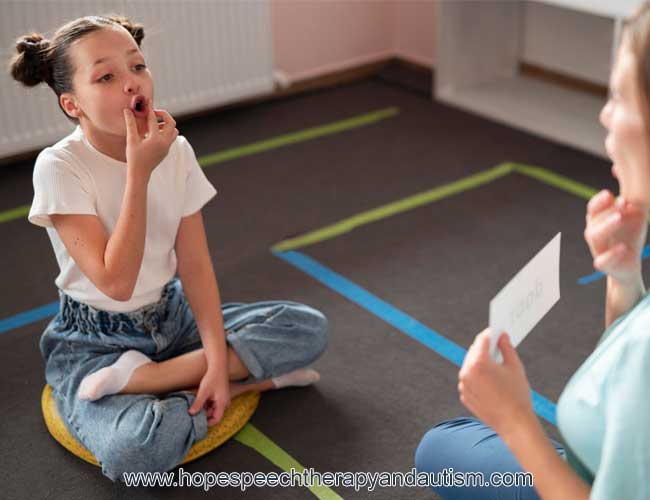
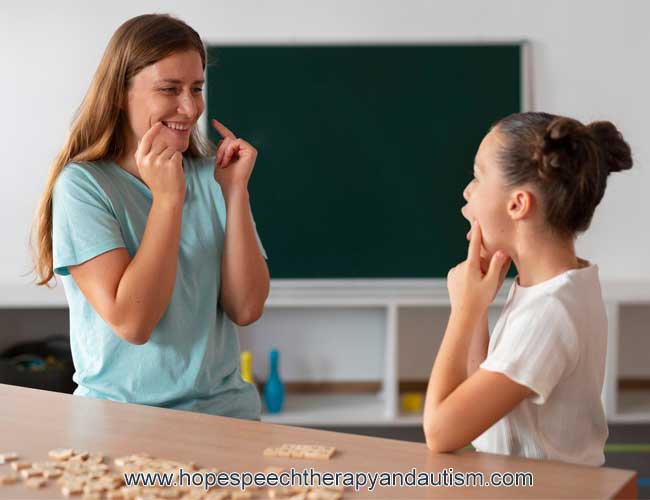
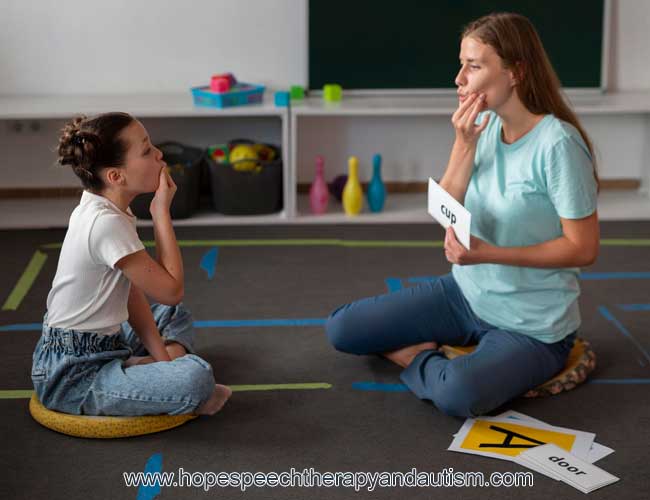
Effective speech therapy should connect exercises to everyday communication. A child might practise requesting an item, answering questions, following instructions, telling a short story, or participating in a conversation rather than simply repeating isolated words. In Copenhagen, speech and language support can also interact with educational planning because communication difficulties may affect classroom participation and learning. Hope Centre can help parents understand which skills should be practised during daily routines and how to reinforce therapy without turning the home into a classroom. For children with autism, communication may also involve visual supports, alternative communication methods, or structured interaction when appropriate. Consistency matters more than performing large numbers of exercises occasionally, so a realistic programme with measurable targets can make online speech therapy more useful and easier for families to maintain.
What Is Autism, and What Symptoms and Treatment Options Should You Know?
Autism spectrum disorder is a neurodevelopmental condition associated with differences in social communication and interaction together with restricted, repetitive, or strongly focused patterns of behaviour and interests. Presentation varies considerably between individuals. Some children may have delayed language, limited reciprocal interaction, repetitive play, difficulty adapting to changes, or unusual responses to sensory input, while some autistic adults may communicate fluently but experience significant social, sensory, or executive-function challenges. Danish health information explains that autism is diagnosed clinically and that assessment may involve developmental history, observation, psychological assessment, and tools such as ADOS when appropriate. Treatment does not remove autism; instead, support aims to improve quality of life, communication, participation, independence, and management of associated difficulties. Hope Centre can provide structured Autism Treatment in Copenhagen focused on the person's actual functional needs rather than applying one identical programme to every individual.
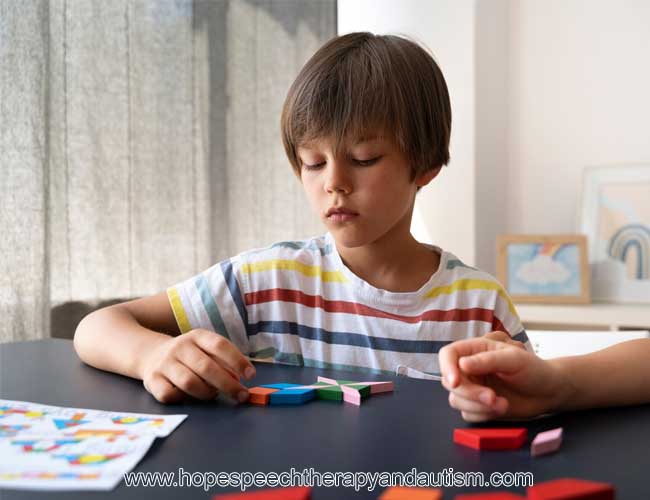
Support for autism is often multidisciplinary because communication, learning, sensory regulation, emotional wellbeing, and daily living skills can influence one another. Copenhagen's municipal system recognises autism among the needs for which special education and additional assistance may be provided, and PPR can support assessment and guidance around children's development and learning. Private online therapy can work alongside those services when families want additional structured practice or specialist guidance. Hope Centre can involve parents in therapy planning, break larger developmental goals into manageable steps, and focus on communication, social interaction, self-help, behaviour regulation, and learning readiness where relevant. The most useful programme is one that respects the individual's strengths and needs while building practical skills that transfer into home, school, and community life.
What Are Special Education and Academic Therapy, and When Can They Help?
Special education provides teaching and learning support adapted to a student's individual educational needs, while academic therapy focuses more specifically on skills that are interfering with learning. Difficulties may involve reading, spelling, writing, mathematics, attention, working memory, language processing, organisation, or completing multi-step tasks. The purpose is not simply to give a child extra worksheets; effective support identifies the underlying learning barrier and adjusts teaching methods accordingly. Copenhagen Municipality states that children with special needs may receive differentiated teaching, supplemental education, or more specialised educational arrangements, depending on their needs. For families seeking Special Education and Academic Therapy in Copenhagen, online sessions can provide focused practice while maintaining communication with parents and, where appropriate, the child's school. Hope Centre can structure individual academic goals, monitor progress, and use repetition, visual support, guided practice, and age-appropriate learning strategies to strengthen important educational skills.


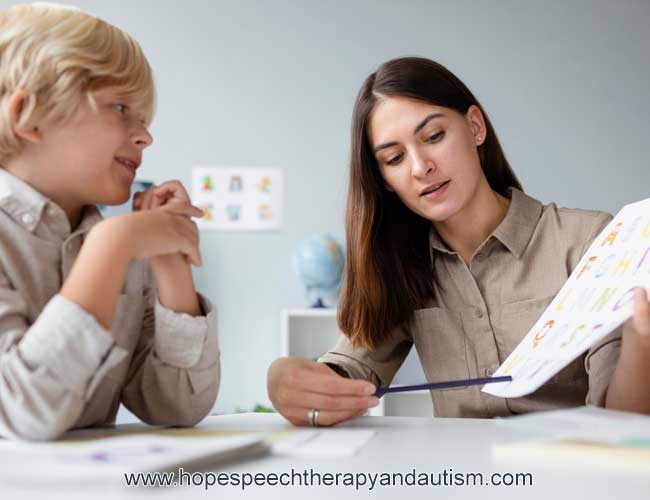
Academic intervention becomes more effective when goals are specific and connected to classroom demands. For example, a learner struggling with reading may need work on phonological awareness, decoding, fluency, vocabulary, and comprehension rather than simply being asked to read more often. A student with autism may also benefit from predictable routines, visual schedules, explicit instructions, and tasks divided into smaller steps. Hope Centre can combine academic practice with communication and developmental support when those areas overlap, helping the learner build skills without losing sight of confidence and independence. Parents can also receive practical guidance on creating manageable study routines at home. This type of coordinated approach can be especially valuable when a child already receives support through Copenhagen's school or municipal system and needs additional individualised practice outside regular teaching hours.
What Is Occupational Therapy and Sensory Integration Therapy, and Who Can Benefit?
Occupational therapy focuses on helping people participate more effectively in everyday activities, including dressing, eating, handwriting, school tasks, play, personal care, and other routines. Sensory integration approaches may be considered when a person responds unusually strongly or weakly to sensory information such as sound, touch, movement, visual input, or body position. A child might become overwhelmed in a noisy classroom, avoid certain textures, seek constant movement, or struggle to organise their body during everyday tasks. These signs do not automatically mean that sensory integration therapy is required, so assessment should connect sensory observations with actual functional difficulties. For families looking for Occupational Therapy or Sensory Integration Therapy in Copenhagen, Hope Centre can focus on practical participation goals, sensory regulation strategies, fine-motor development, coordination, and daily living skills where appropriate, while keeping the intervention personalised rather than treating sensory behaviours in isolation.
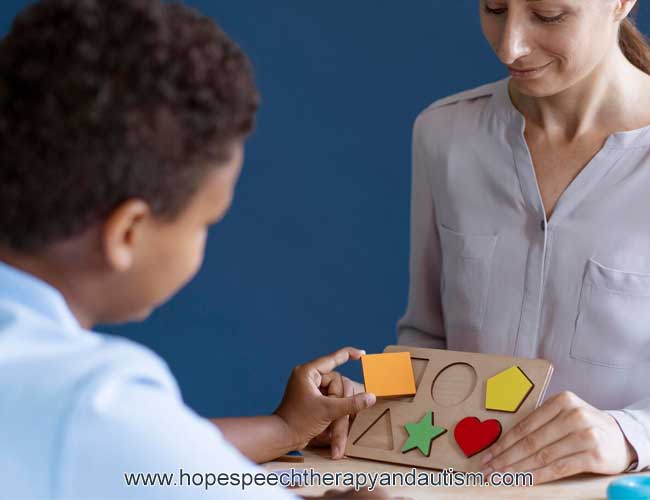
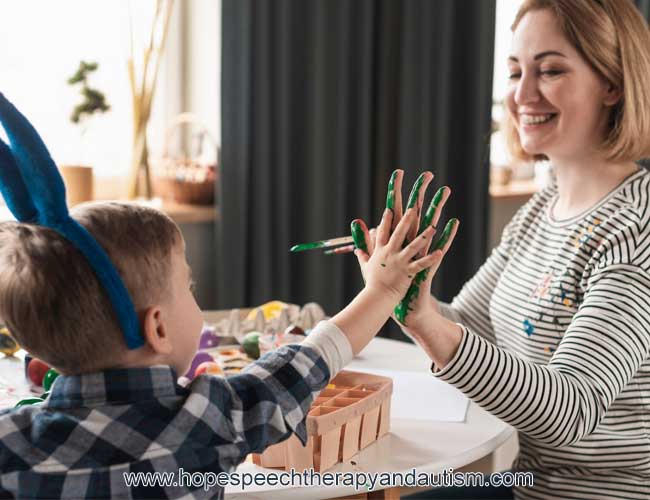


Therapy should ultimately make everyday activities easier, not simply produce better performance during a session. If a child has difficulty remaining seated, for example, the useful question is whether this affects eating, learning, play, or participation and what environmental or activity changes can help. Online occupational therapy may involve caregiver coaching, demonstrations, home-based activities, and structured routines, although some goals may require in-person assessment or hands-on intervention. Hope Centre can help families identify practical strategies that fit naturally into daily life, such as organising a predictable routine, adapting tasks, supporting fine-motor activities, or reducing unnecessary sensory overload. When sensory differences occur alongside autism, speech difficulties, or learning challenges, coordination between therapies can make the overall programme more consistent and easier for the family to follow.
What Is CBT, and When Can Cognitive Behavioral Therapy Help?
Cognitive Behavioral Therapy, or CBT, is a structured psychological approach that examines the relationship between thoughts, emotions, behaviours, and situations. It is used for several difficulties, including anxiety, depression, certain behavioural problems, and other emotional challenges, depending on the individual's age and clinical needs. CBT does not treat autism itself, but it can be useful for associated emotional or behavioural difficulties when delivered by an appropriately trained professional. For children and young people, therapy may be adapted through age-appropriate language, activities, visual explanations, and involvement from parents or caregivers. Families searching for a Cognitive Behavioral Therapy Centre in Copenhagen should therefore look for an assessment-led programme rather than a generic package. Hope Centre can help identify specific concerns, establish practical goals, teach coping and problem-solving strategies, and support the transfer of skills into everyday situations when CBT is considered appropriate.

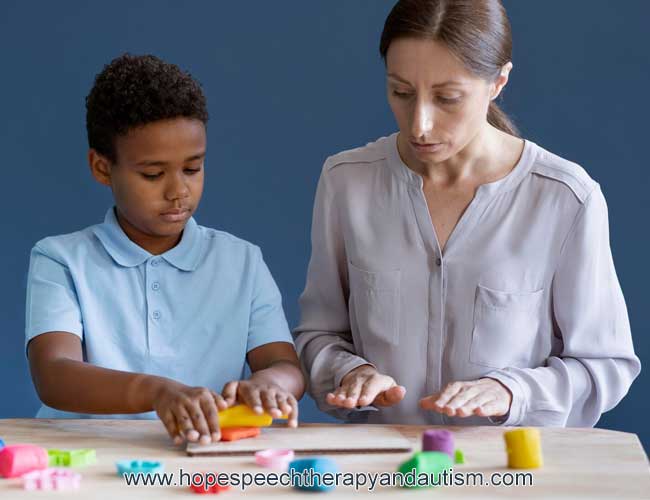


Good CBT is goal-focused and usually involves learning skills that can be practised between sessions. Depending on the concern, this may include recognising unhelpful thought patterns, gradually approaching situations that cause anxiety, improving problem-solving, developing emotional regulation strategies, or changing behaviours that maintain a difficulty. For an autistic person, CBT may need additional adaptation around communication style, sensory needs, routines, and concrete examples. Hope Centre can make the process understandable and practical by linking therapeutic strategies to situations that matter in the person's real life, such as school participation, social situations, transitions, or managing worries. Where symptoms are severe, complex, or require medical assessment, families should also involve the appropriate healthcare professional. Online therapy can be a convenient option, but the suitability of remote CBT should always be decided according to individual needs and clinical judgement.
What Is Hearing Aid Treatment, and Where Can You Find a Hearing Aid Centre in Copenhagen?
Hearing aid treatment begins with confirming the type and degree of hearing loss through appropriate hearing assessment. Common signs can include frequently asking others to repeat themselves, difficulty following conversations in noise, increasing television volume, misunderstanding speech, or noticing that sounds seem unclear. Hearing loss can also affect communication and learning, particularly in children, which is why hearing should be considered when speech or language development is unexpectedly difficult. In Denmark, people with suspected hearing loss can contact an ear specialist or hearing clinic for assessment, and a referral from an ear specialist is required for hearing-aid subsidy. Public information also explains that eligible people may receive hearing aids through the public system or purchase them from an approved private provider with public support. Hope Centre can support communication-focused therapy alongside hearing-related needs, helping individuals develop clearer listening and communication strategies while hearing care follows the appropriate medical and audiological pathway.

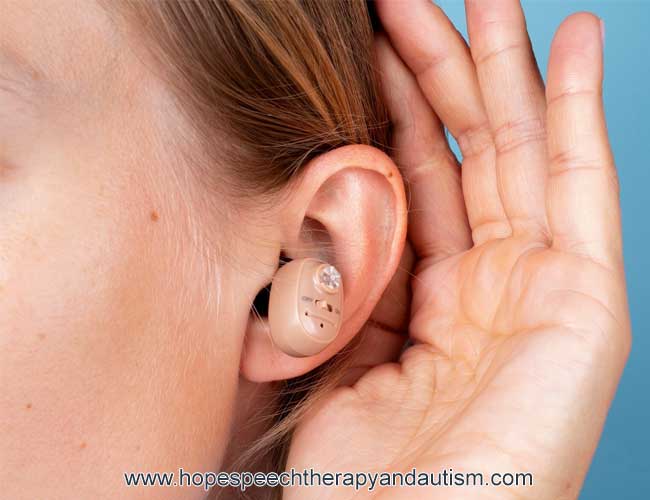
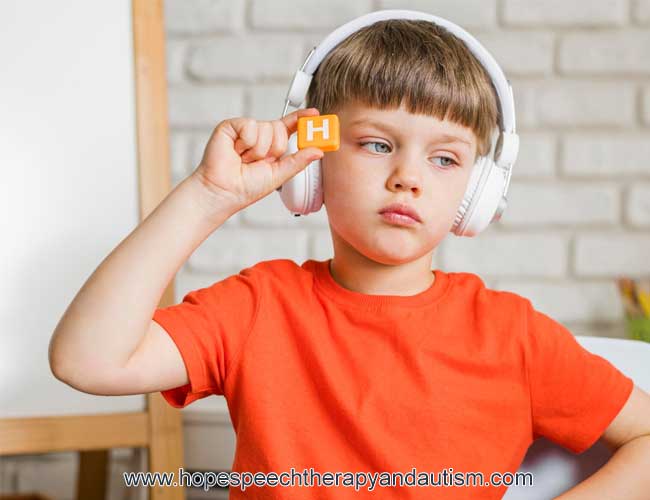

Choosing hearing support should involve more than selecting a device. Hearing aids need appropriate fitting, adjustment, regular use, and follow-up so that the wearer can benefit from improved access to sound. Children may also require communication and educational support because hearing ability affects how they access spoken language in everyday environments. Hope Centre can complement hearing-related care by addressing communication, speech, language, and learning needs that may remain even after hearing technology is introduced. Families in Copenhagen should use the Danish healthcare and public support pathways for hearing assessment, eligibility, and hearing-aid provision, while specialist therapy can address functional communication goals. A coordinated approach is particularly valuable when hearing difficulties overlap with developmental or learning concerns, because improving access to sound and improving communication skills are related but not identical goals.
Are You Ready to Choose the Right Therapy Support in Copenhagen?
The right therapy programme should begin with the person's actual needs rather than a label or a one-size-fits-all package. Speech therapy may target communication, autism support may focus on independence and participation, academic therapy may address specific learning barriers, occupational therapy may improve daily functioning, CBT may address associated emotional difficulties, and hearing care may improve access to sound and communication. Copenhagen already has municipal and healthcare pathways for many of these needs, so private online therapy should be viewed as complementary support when appropriate. Hope Centre for Speech Therapy and Autism Treatment can provide structured guidance across several developmental and communication areas, with goals designed around practical progress. If you are searching for an Online Autism Treatment & Speech Therapy Centre in Copenhagen, contact Hope Centre to discuss the individual's needs, identify suitable therapy options, and build a clear plan focused on meaningful everyday outcomes.